Siniša Radulović is a Montenegrin contemporary artist working across video, installation, and conceptual formats. Rooted in the context of post-socialist transition, he creates environments in which the boundaries between the real and the simulated begin to dissolve.
This year, Siniša represents Montenegro at the Venice Biennale 2026 with Out of The Blue, I’m Swept Away - a technically complex, multi-layered installation combining sculpture, video, sound, and photography into an immersive environment. Weighing over nine tons, the work stands as one of the most physically ambitious and logistically demanding presentations the country has brought to the Biennale to date.
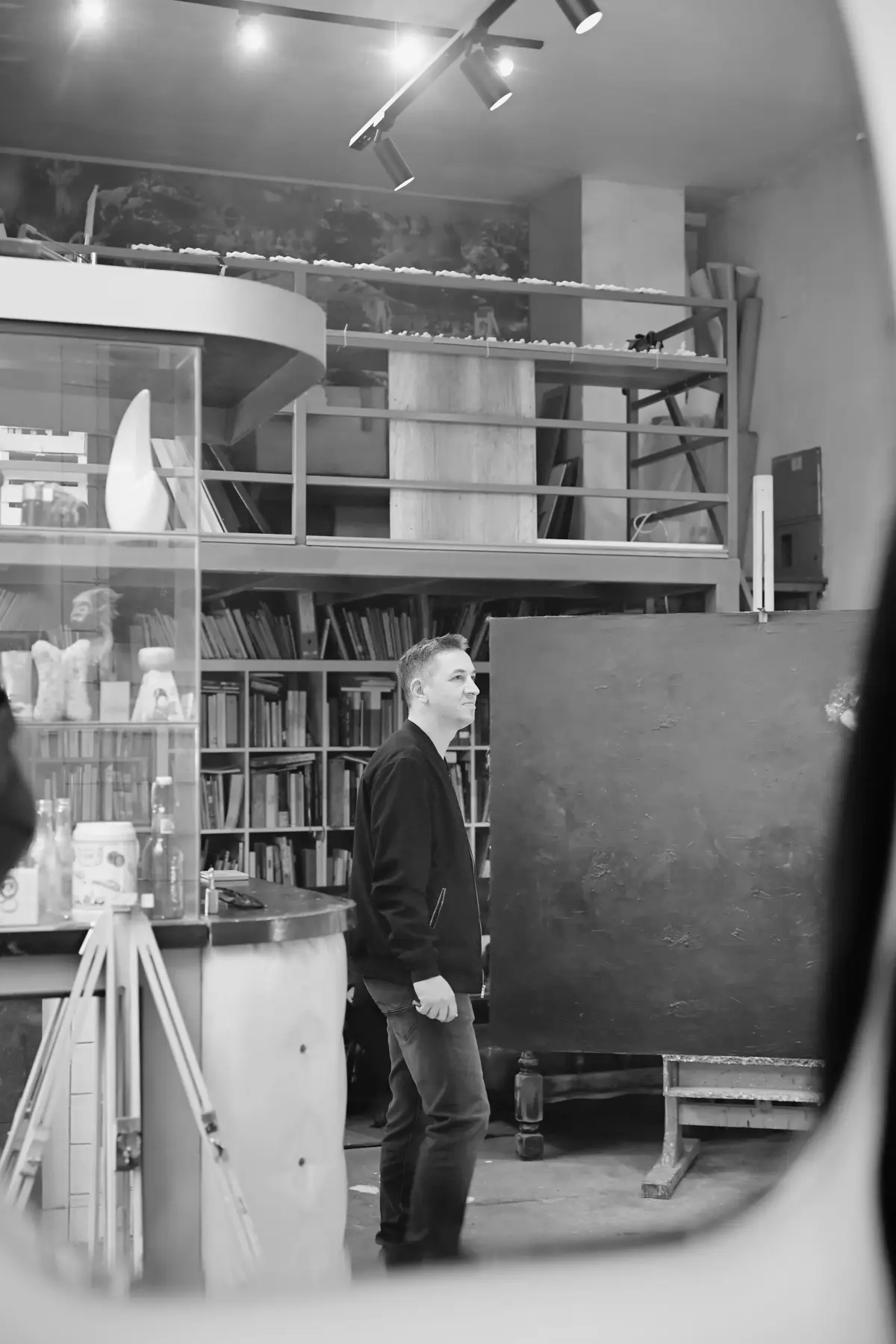
Siniša Radulović in his atelier | Podgorica, 2026
We meet him in his atelier in Podgorica, Montenegro - a space that once belonged to his father - legendary Dragan Radulović, tucked inside an old socialist building on a street that seems almost untouched by contemporary time.
There is something unusually still about it. The facades, the textures, even the small grocery store next door - everything carries the persistence of another era.
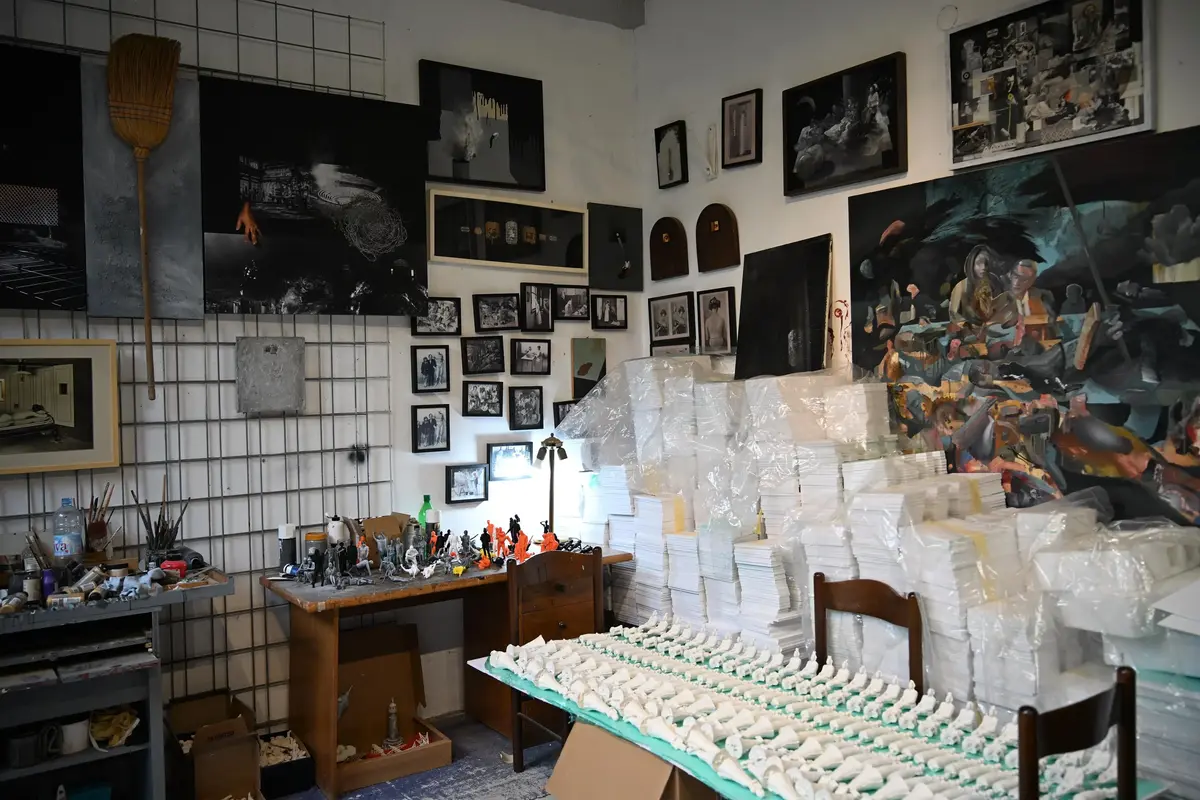
The atelier feels like entering someone’s mind - where nothing is immediately clear, and everything exists at once.
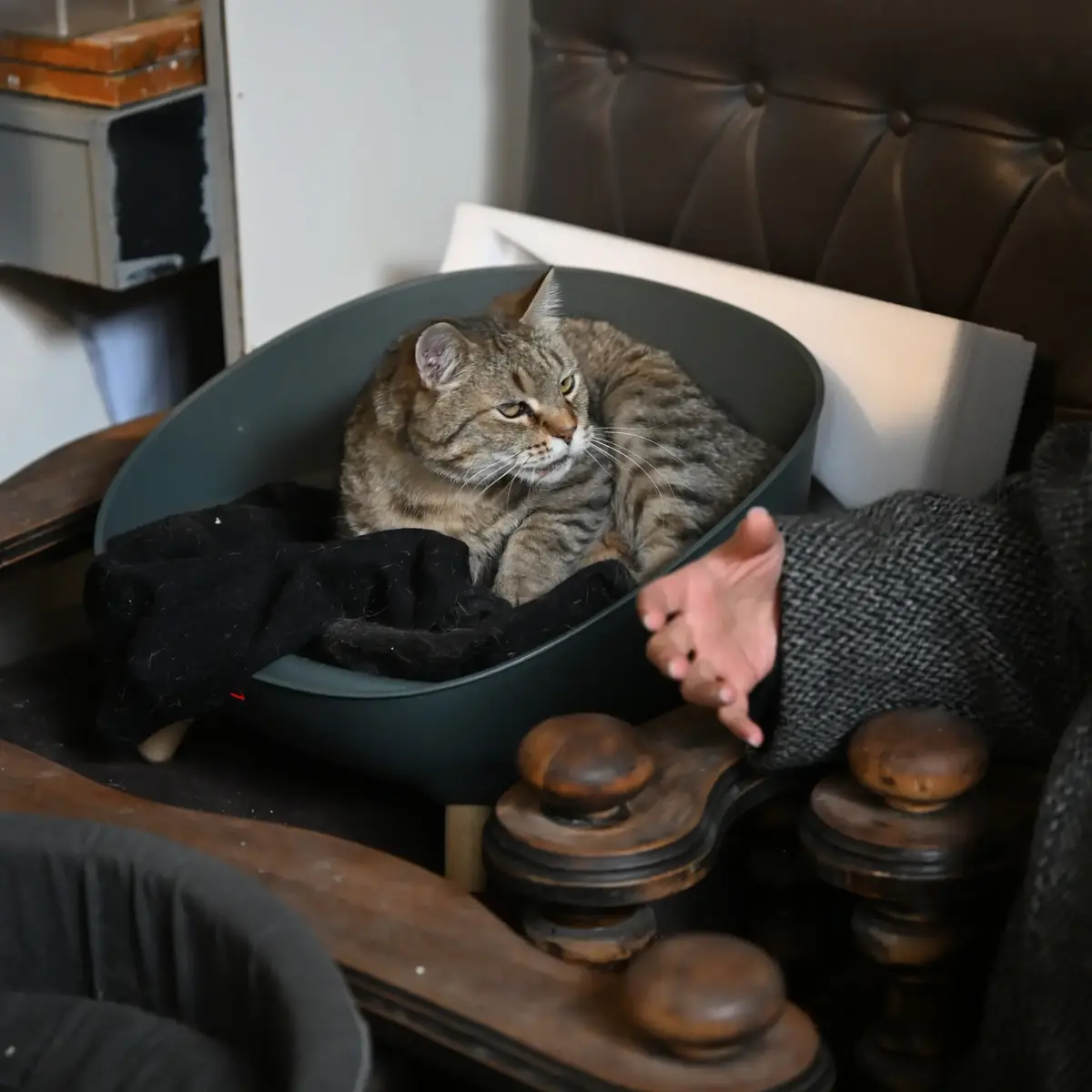
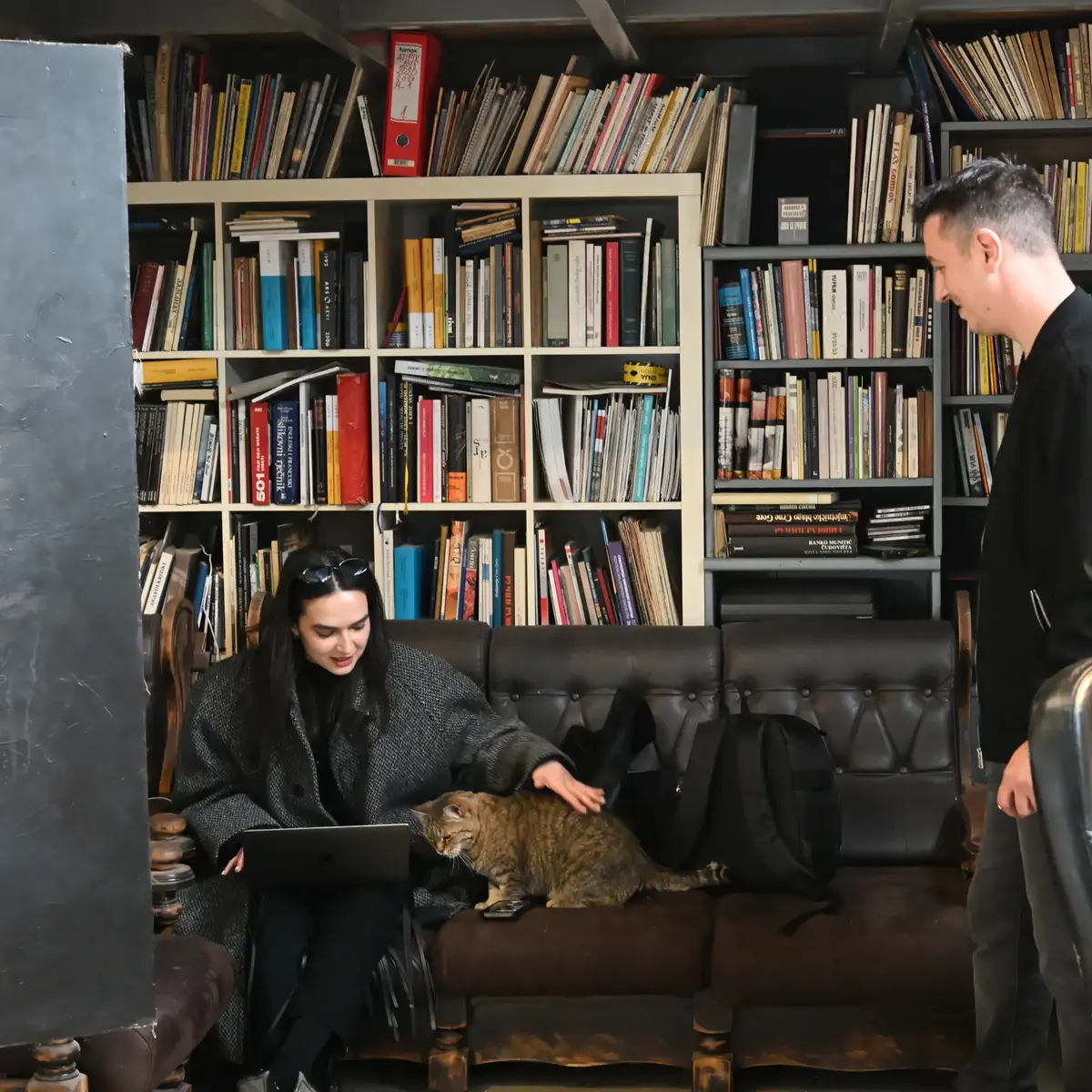
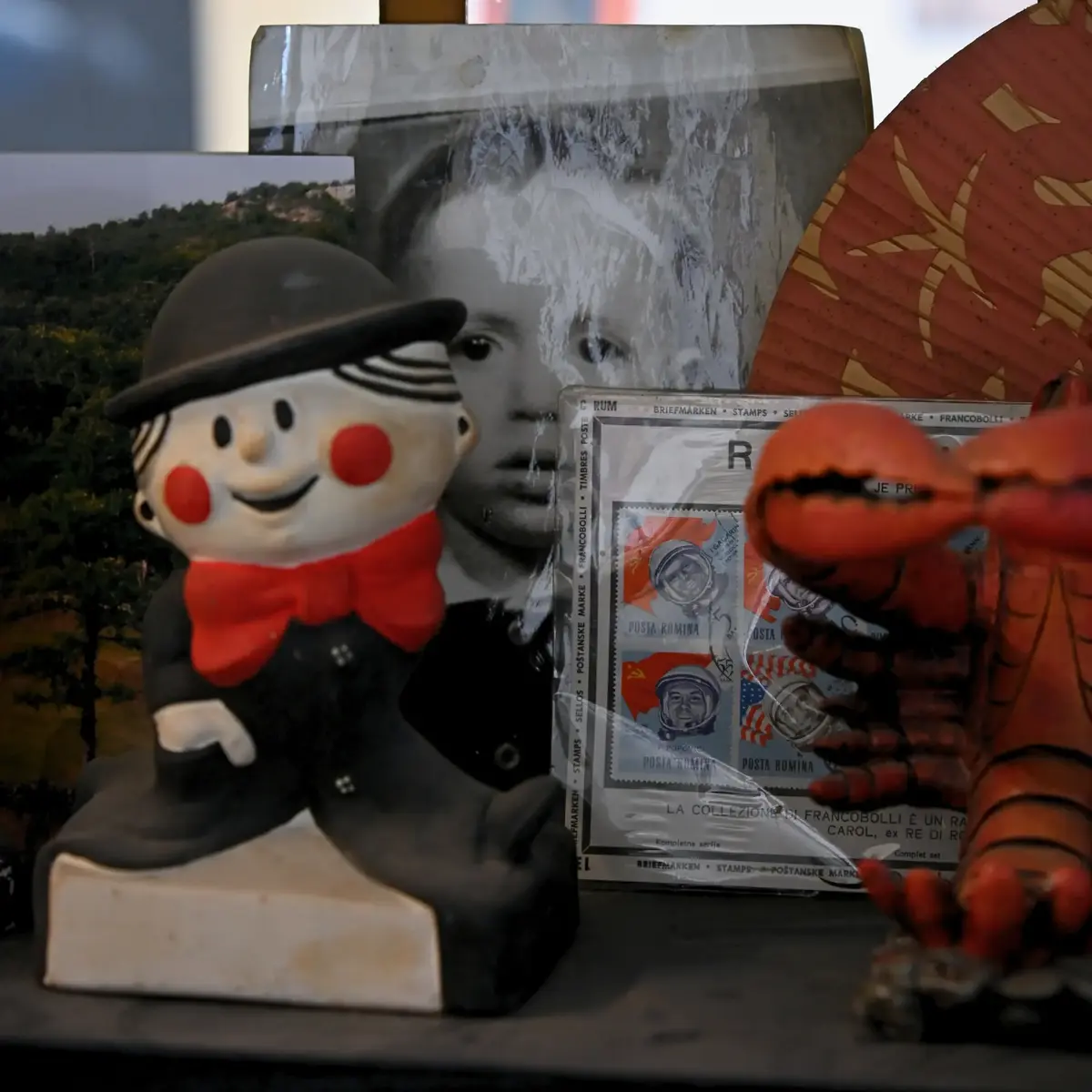
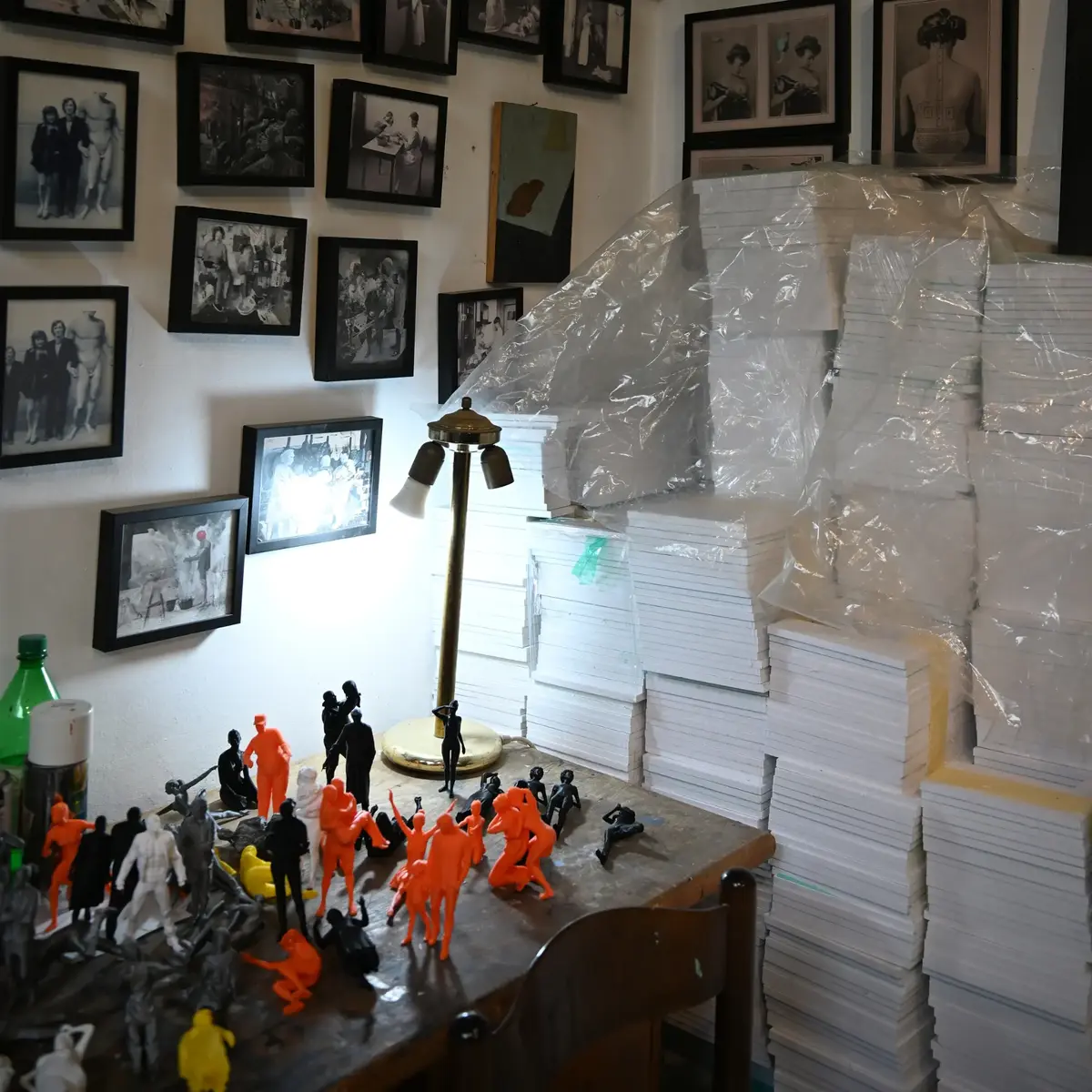
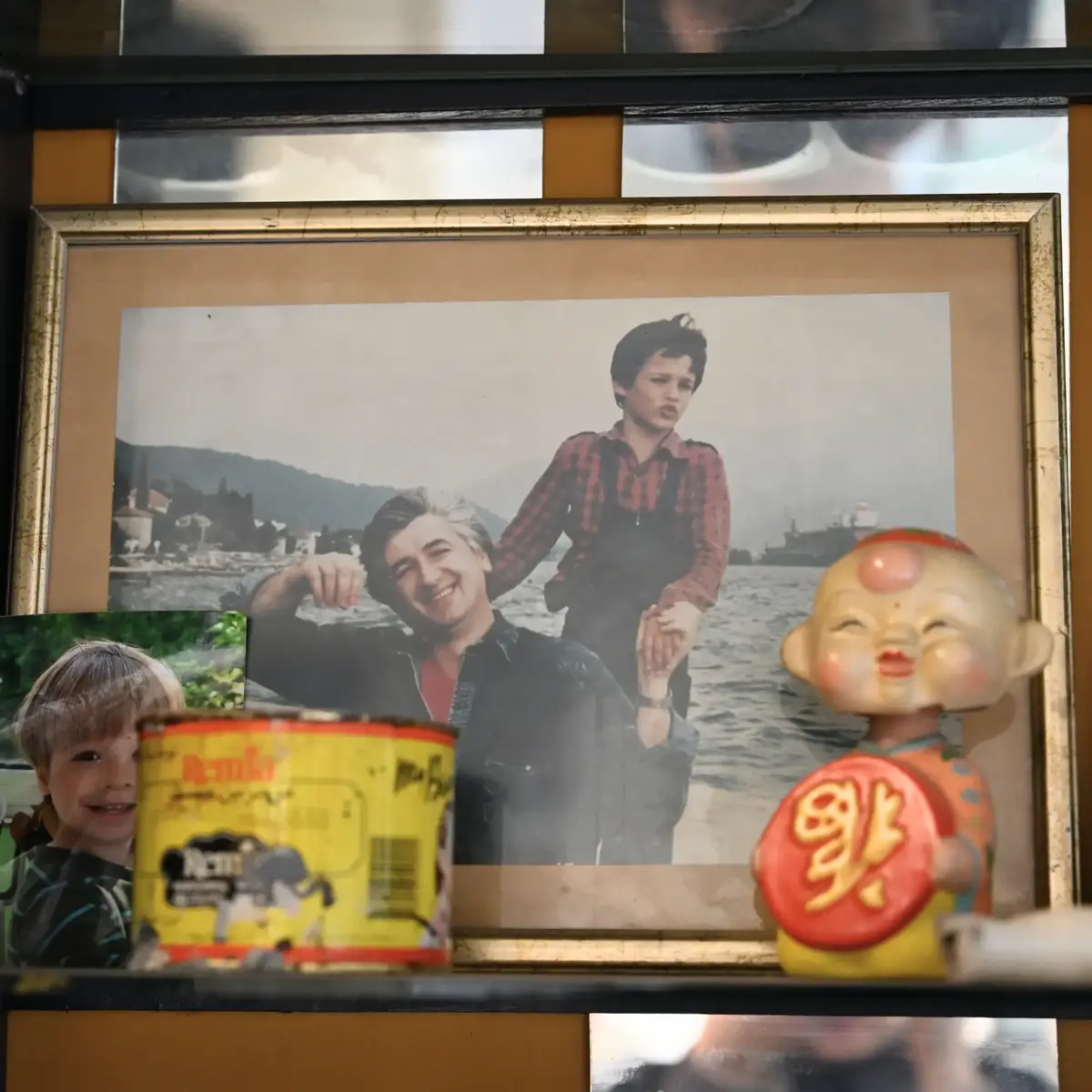
Živojin, a 12-year-old cat, lives here - unmistakably the studio’s mascot. Paintings, sketches, collages, and family photographs unfold across the room, layered among objects that read like fragments of memory.
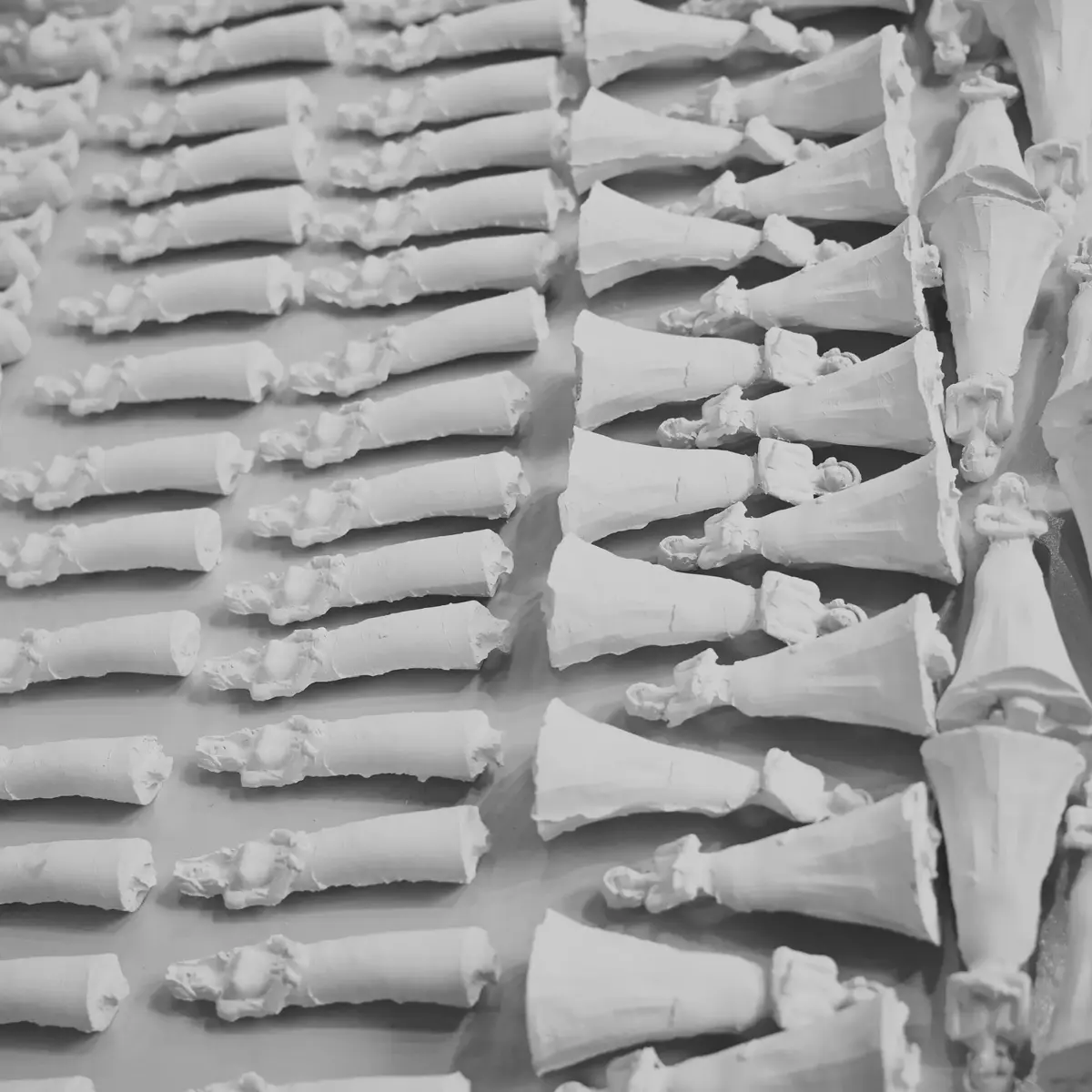
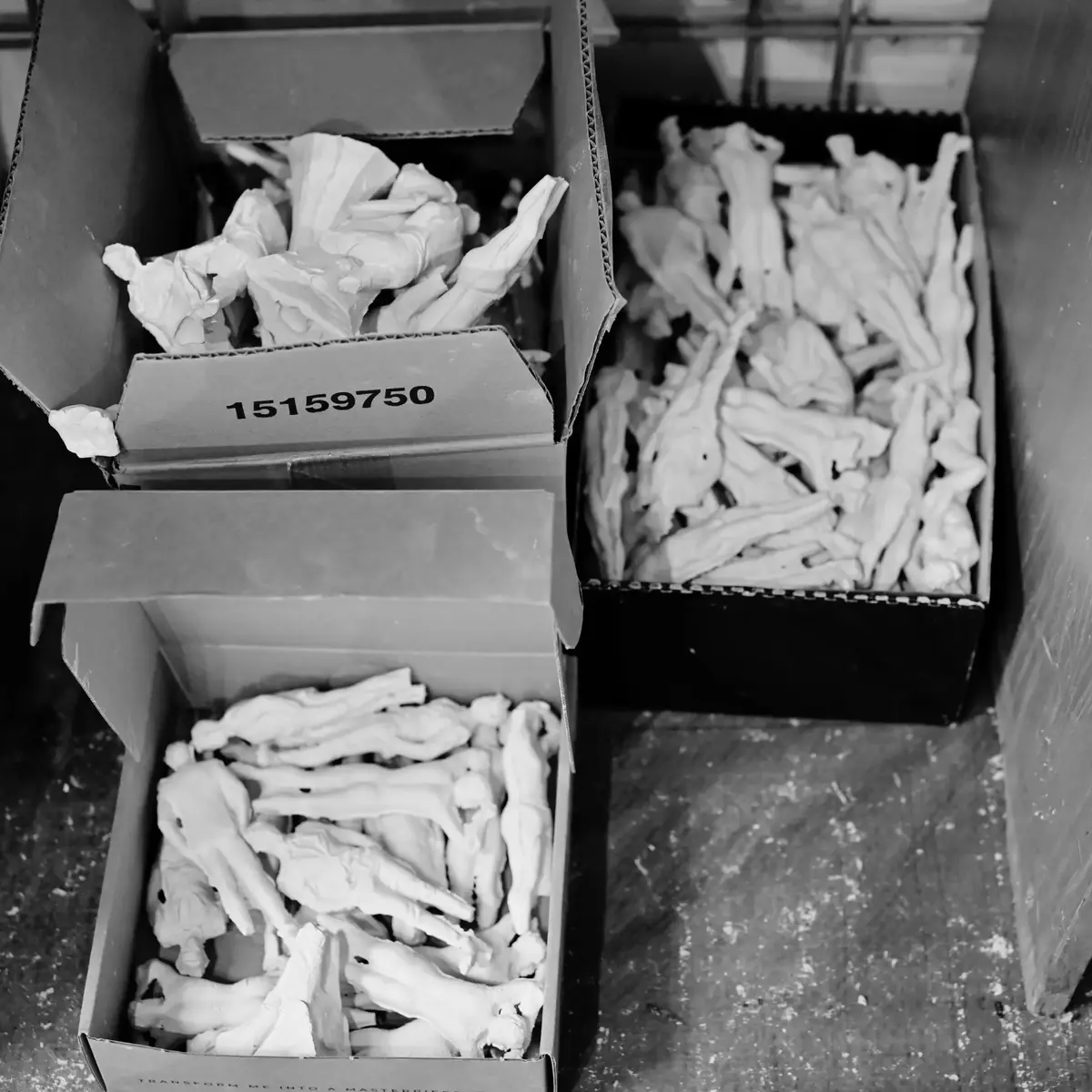
At first glance, everything suggests a world of antiques; but looking closer, that impression begins to fracture. Among the artefacts are dozens of figurines - some hand-formed in clay, others 3D printed - all part of the evolving work for the Biennale.
ZINA: What kind of environment shaped you, growing up in Podgorica in the 90s. How did you experience that time, how was your childhood?
SINIŠA: It was nice. Growing up in the early ’80s and early ’90s was very different from today. For me it was a beautiful time, especially because of family. My parents were very involved in my childhood, my father knew how to connect with children and how to approach them. He was a children’s poet and a TV author of documentary programs for kids, and he also worked in painting and photography.
It was a period when parents tried to protect their children from the impact of the crisis. We didn’t really feel it - it all passed through play. Looking back now, I realize those were quite difficult and sad years. Fortunately, Montenegro wasn’t directly affected by the war, but there were still consequences for society, people’s finances, and inflation. Life was much simpler than today. Technology wasn’t as widespread or advanced, kids would just go outside, find something to do, and play.
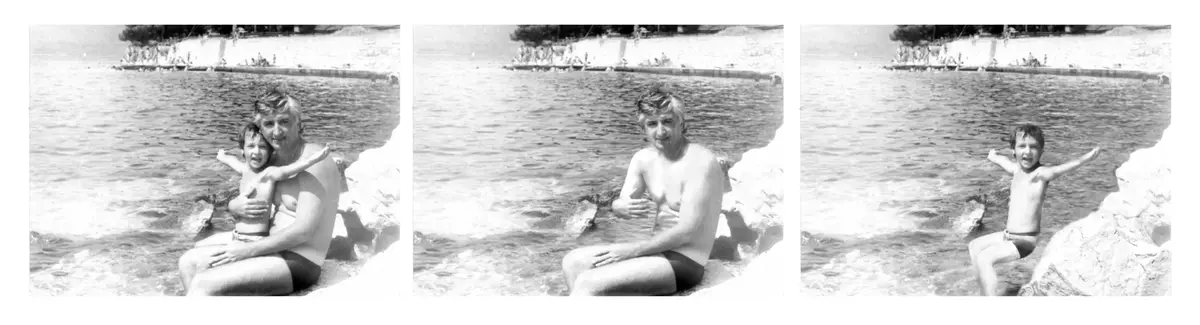
Dead Whales Can’t Wave Back, 2015 / digital print, 11x15cm (x3)
ZINA: In a country where everyday survival often takes precedence, where do you see the place for contemporary art - do you think there is enough space for it in Montenegro?
SINIŠA: We are in a very specific situation. Unlike our neighbours in the region, who experienced a breakthrough of contemporary art and avant-garde movements in the 1960s and 1970s, we didn’t have that. So we are still catching up - there’s a significant gap to overcome in moving from a conservative framework into new media. Efforts are being made by certain individuals, but it remains very challenging.
Those “missing eight hours” from the communist system that were once dedicated to cultural development are gone - people today don’t have the time or the means to afford that kind of engagement. As a result, one generation produces another that grows up seeing art not as a natural part of life, but as something reserved only for a select few.
ZINA: Do you feel that working from Montenegro isolates you or gives you a specific perspective you wouldn’t have elsewhere?
SINIŠA: It comes down to choice - how much someone is committed to creating, and how much to building a career. Here, unfortunately, those two things often have to be separated, unless you’re working in commercial art. It’s difficult to break through from Montenegro, regardless of quality.
When I was younger, I felt it isolated me. But it really depends on how you define success. For me, success is having the time, the freedom, and the will to create. About ten years ago, I stopped doing interviews. I wanted to see what happens when you remove publicity and focus only on the work. You lose a lot when you disconnect from the media, but you also gain a lot.
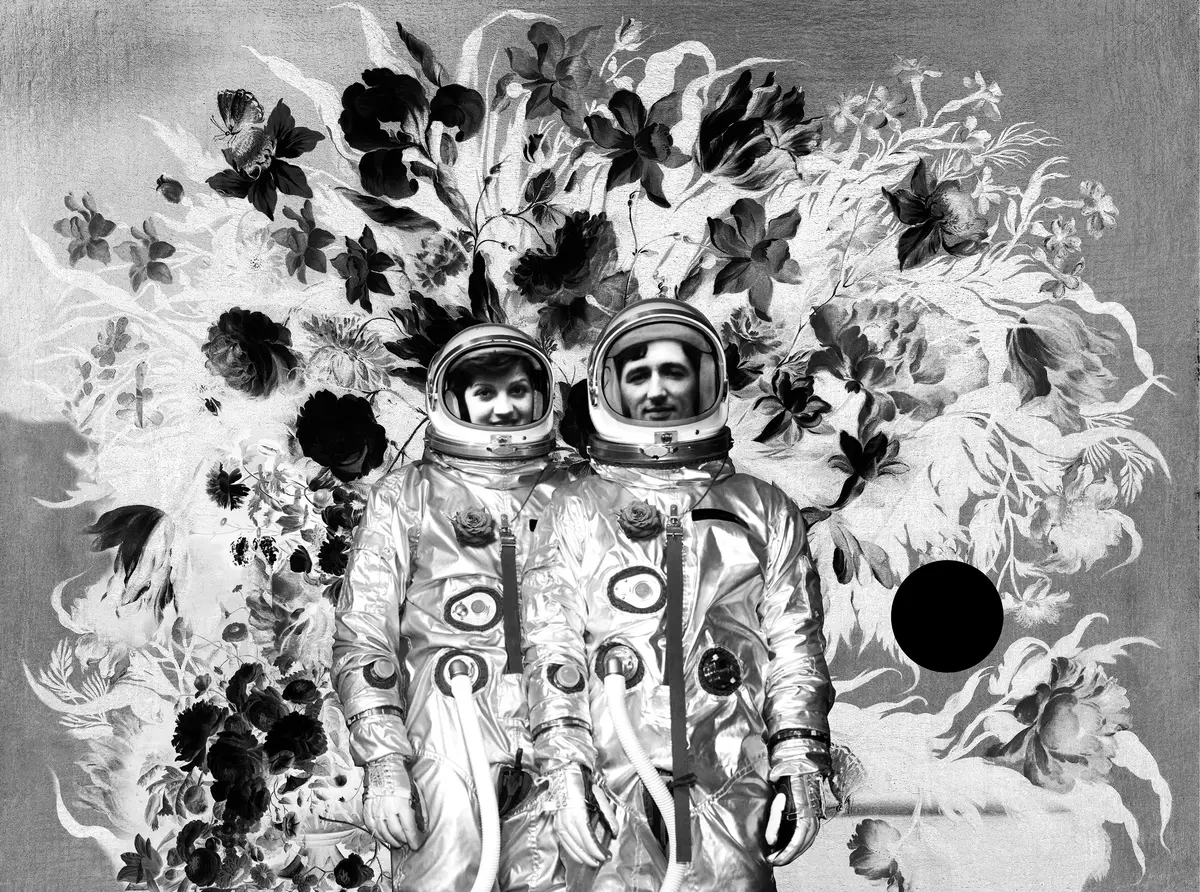
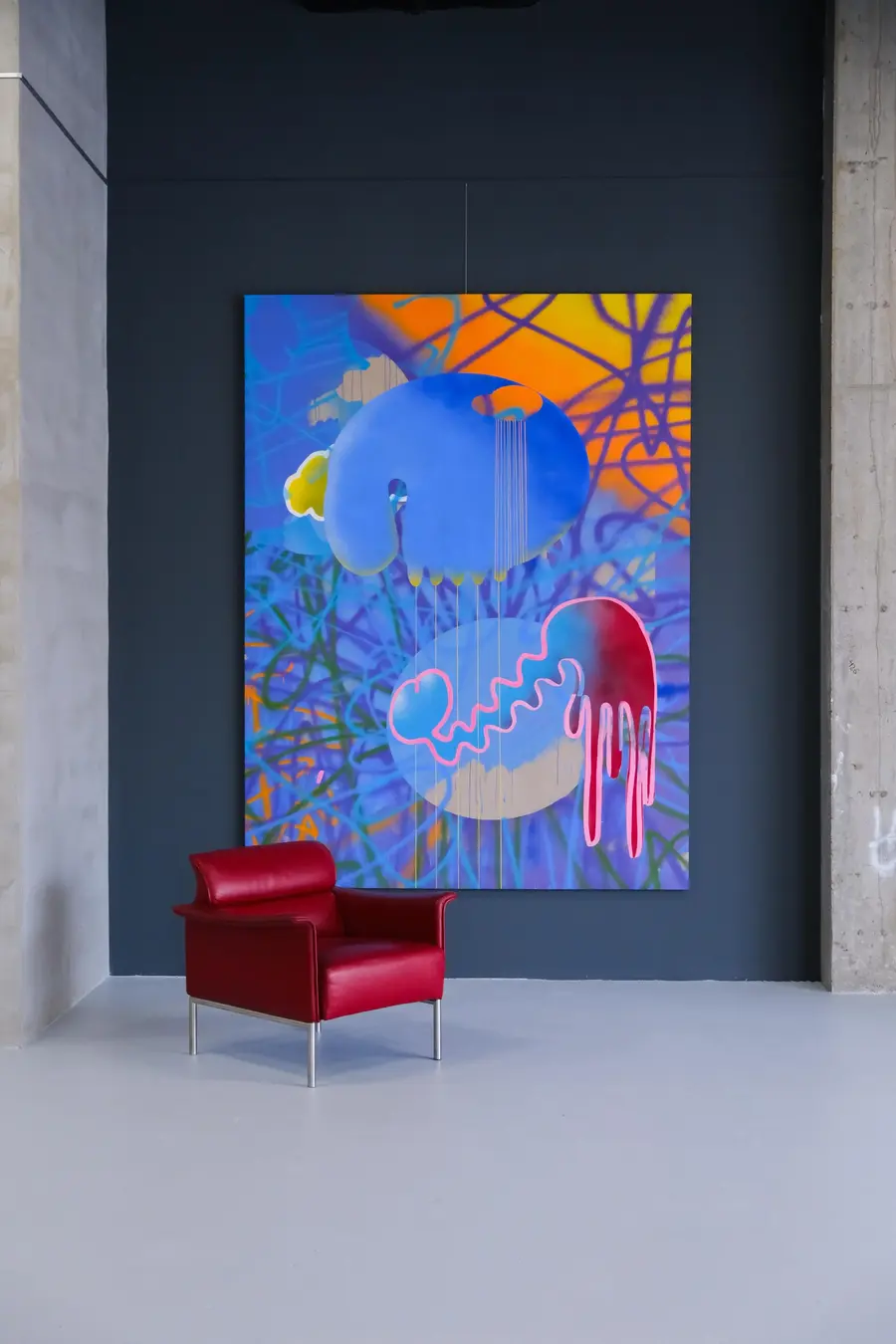
"Buy Jupiter", 2015 / Authorized artist's print (1/1), 50x70cm / collection: Museums and Galleries of Podgorica
"Unlike our neighbours in the region, who experienced a breakthrough of contemporary art and avant-garde movements in the 1960s and 1970s, we didn’t have that."
ZINA: You explore existential and anthropological themes, capitalism, as well as references such as George Orwell’s 1984 ( in a piece “Terraforming”).
Do you think our world is truly moving in the direction Orwell described - has it really become that dystopian, especially considering everything happening today?
SINIŠA: Experience shows that every generation tends to believe its time is the worst. We’re certainly not moving in a good direction, but that feels more like a constant than something new. When you think about the two world wars and the fact they’re called the First and Second - it implies the possibility of a third. I’ve always been drawn to fiction, especially dystopian narratives, so all of this feels interconnected to me.
What’s interesting in Terraforming is that it can be directly linked to Out of The Blue, I’m Swept Away through two very intimate contrasts. In the Biennale work, those are the models of my apartment and figurines of people I know. In Terraforming, it’s an image of my son that becomes a 3D landscape. It’s a shift from the intimate to the collective, and for me, the collective often carries a dystopian dimension.
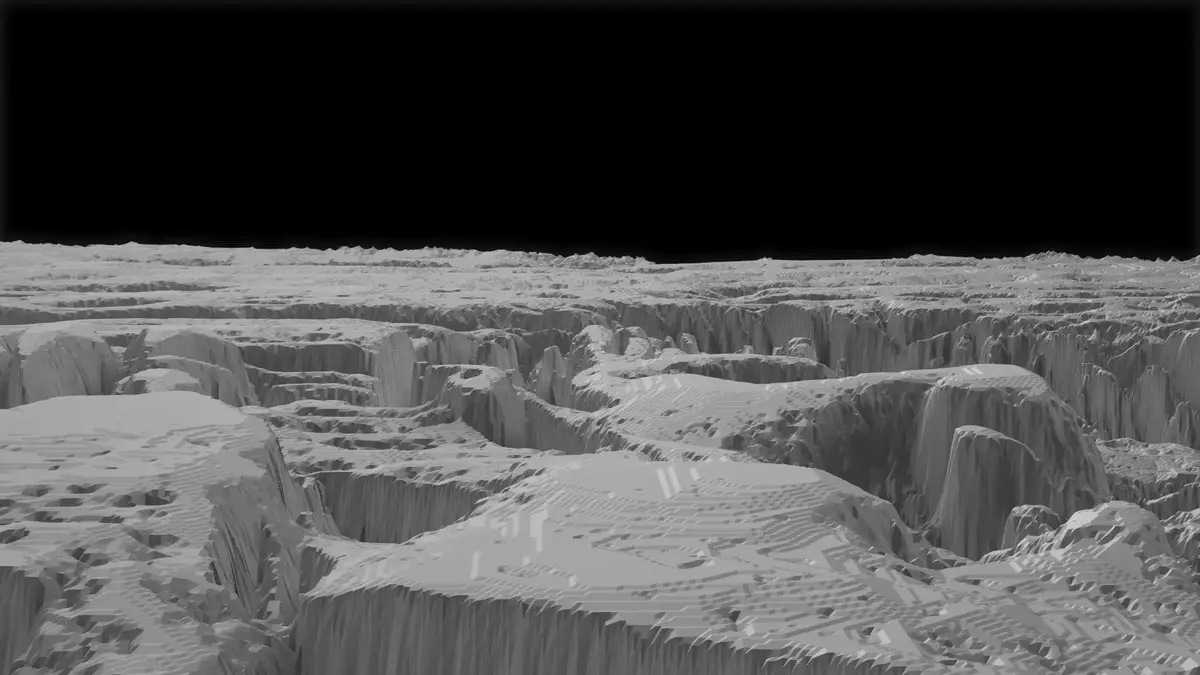
Terraforming, 2020 / video, 6’02’’/ collection: Museum of Contemporary Art of Montenegro
ZINA: Your work briefly associated me with the movie Being John Malkovich, as well as Plato’s Allegory of the cave. Where is “Out of the blue I’m swept away” here? Is it closer to observing illusions or inhabiting them? Is the viewer the final piece of the puzzle in this piece?
SINIŠA: It sits somewhere between the two, but it’s not exactly either. In the end, it’s about inserting yourself into the work. The viewer is always part of the work, but here we make that more explicit by shifting viewer’s position - not just in terms of perspective, but also in relation to scale. Within the installation, the usual sense of proportion begins to dissolve.
ZINA: What was the starting point of this piece? How did you choose the medium?
SINIŠA: It began, as most of my work does, from something intimate. A few years ago, I was buying an apartment and entered its floor plan into a program to figure out furniture placement and dimensions. Moving those elements around started to resemble a Mondrian composition - I had dozens of variations, and that layout stayed with me.
When the Biennale open call was announced, the events in Palestine were unfolding, and I had a breakthrough connection between drone images of ruins and the floor plan of my apartment. Both were seen from a bird’s-eye view - that was the link. That is why it became an installation: the format had to be physical and real, so that I would literally have to walk over something reduced in scale. From there, I began thinking about who lives in those apartments, who those people are.
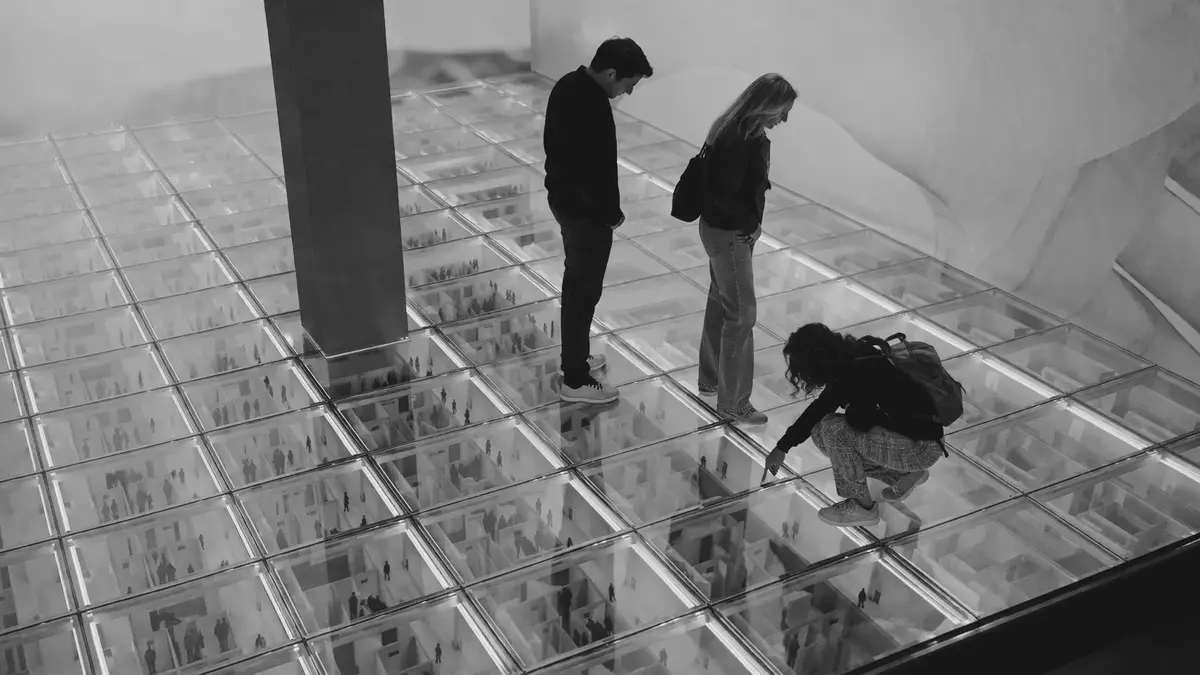
Out of the Blue, I’m Swept Away, 2025/2026 / © Siniša Radulović
"It began, as most of my work does, from something intimate."
ZINA: Out of the Blue, I’m Swept Away is incredibly technically demanding, drawing on architecture and engineering. How much space does a piece like this leave for improvisation?
SINIŠA: I’m not someone who follows a fixed concept from the start. In this case, as with any work, the process begins creatively, develops to a peak, and then shifts into execution - where there’s less room for improvisation. What remains is a small space at the end, which here comes through the placement of the figurines within the model. It’s similar to painting: you begin freely, then enter a more structured phase, and finally arrive at a finishing moment.
Out of the Blue, I’m Swept Away is indeed highly complex on a technical level. It is conceived as a multi-layered spatial installation combining sculpture, video, sound, and photography into a single immersive environment. This complexity lies in the precise coordination of all elements - from spatial construction and modular structures to the synchronization of video and sound. The most demanding part is the glass floor, which required specialized materials and a carefully engineered support system to meet both aesthetic and safety standards. The entire process demanded a high level of precision, as well as close collaboration with engineers, structural specialists, and the team at the Museum of Contemporary Art of Montenegro, whose support was essential throughout the project.
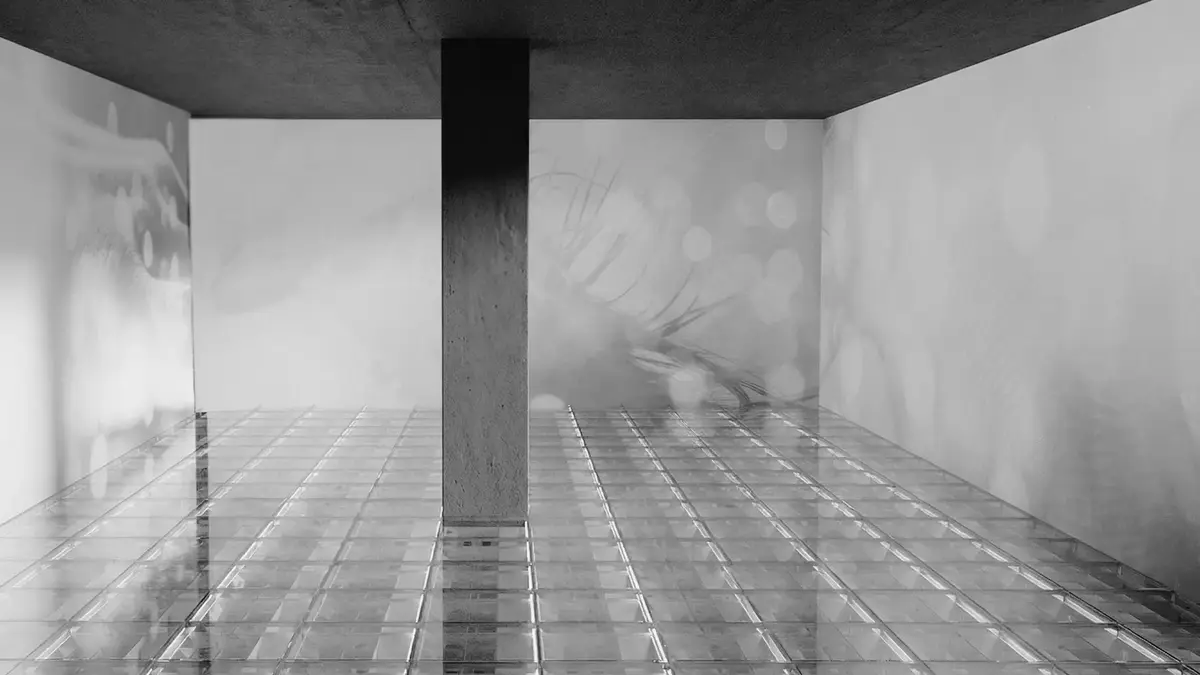
Out of the Blue, I’m Swept Away, 2025/2026 / © Siniša Radulović
"The entire process demanded a high level of precision, as well as close collaboration with engineers, structural specialists, and the team at the Museum of Contemporary Art of Montenegro, whose support was essential throughout the project."
ZINA: In this piece there are around 2,000 figurines, which are all hand-painted. The process sounds almost meditative - what kind of mental state do you enter while working on them?
SINIŠA: It’s something I’ve been mentioning a lot lately - I actually look forward to the days when I work on the figurines, because that’s the only moment of calm within the project. Everything else is organization and planning. But when I enter the phase of sanding and painting them, it becomes almost zen. That’s when I can think creatively - about future projects or something else entirely.
This project is so large and intense that it requires a lot of non-creative energy as well - production, coordination - just to make everything work.
There are many people involved, and what’s important to me is that everyone is from Montenegro. It was essential that this is truly our own production.
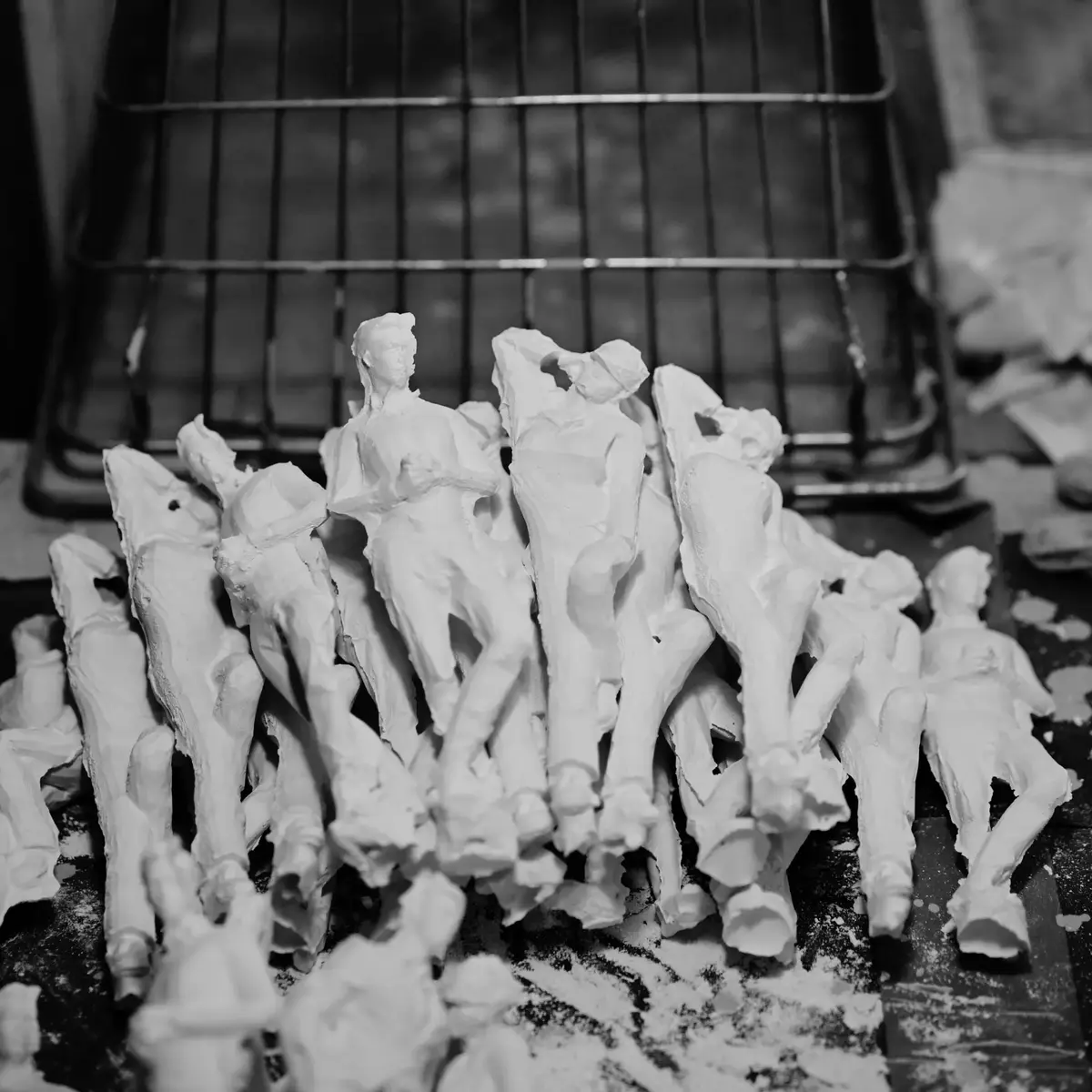
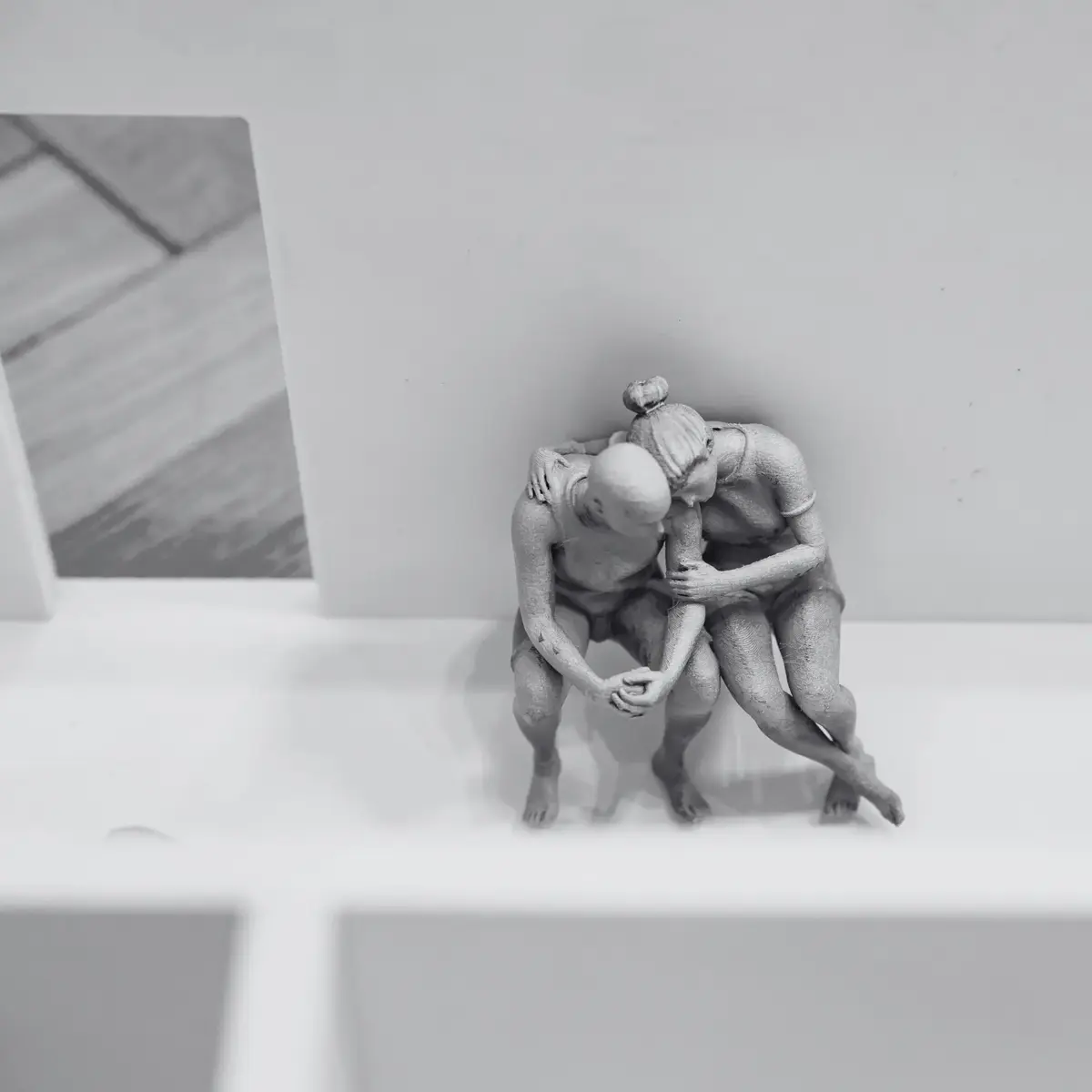
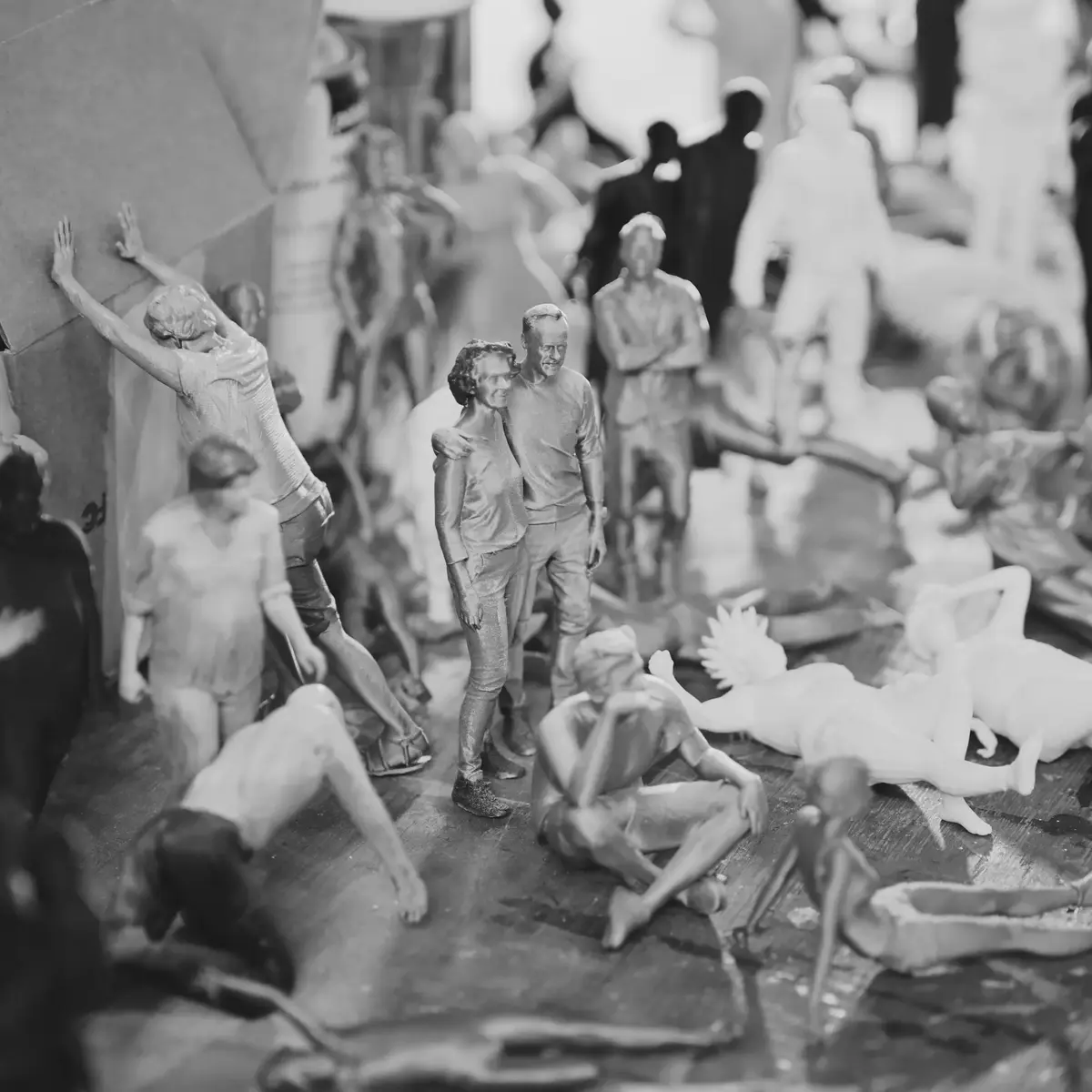
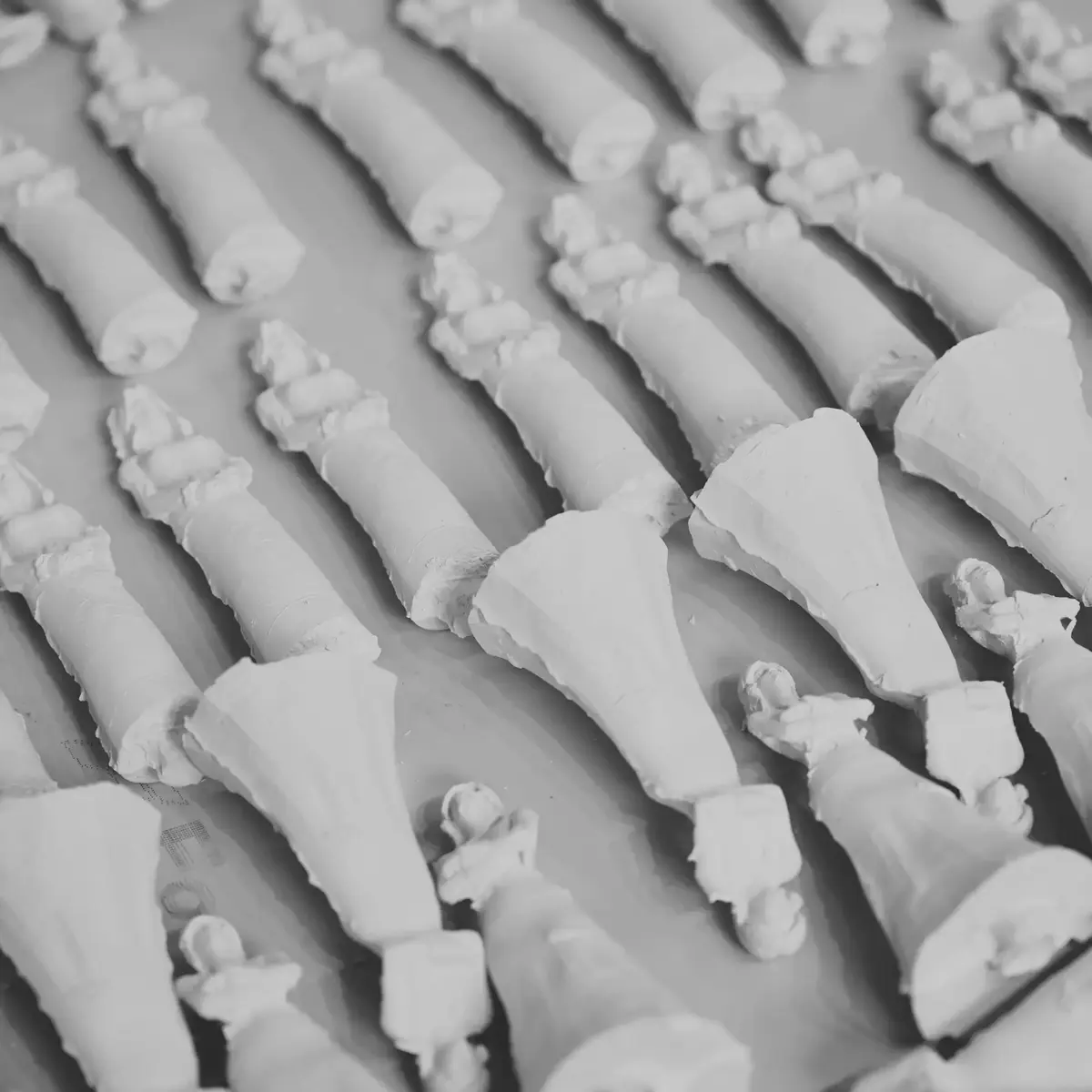
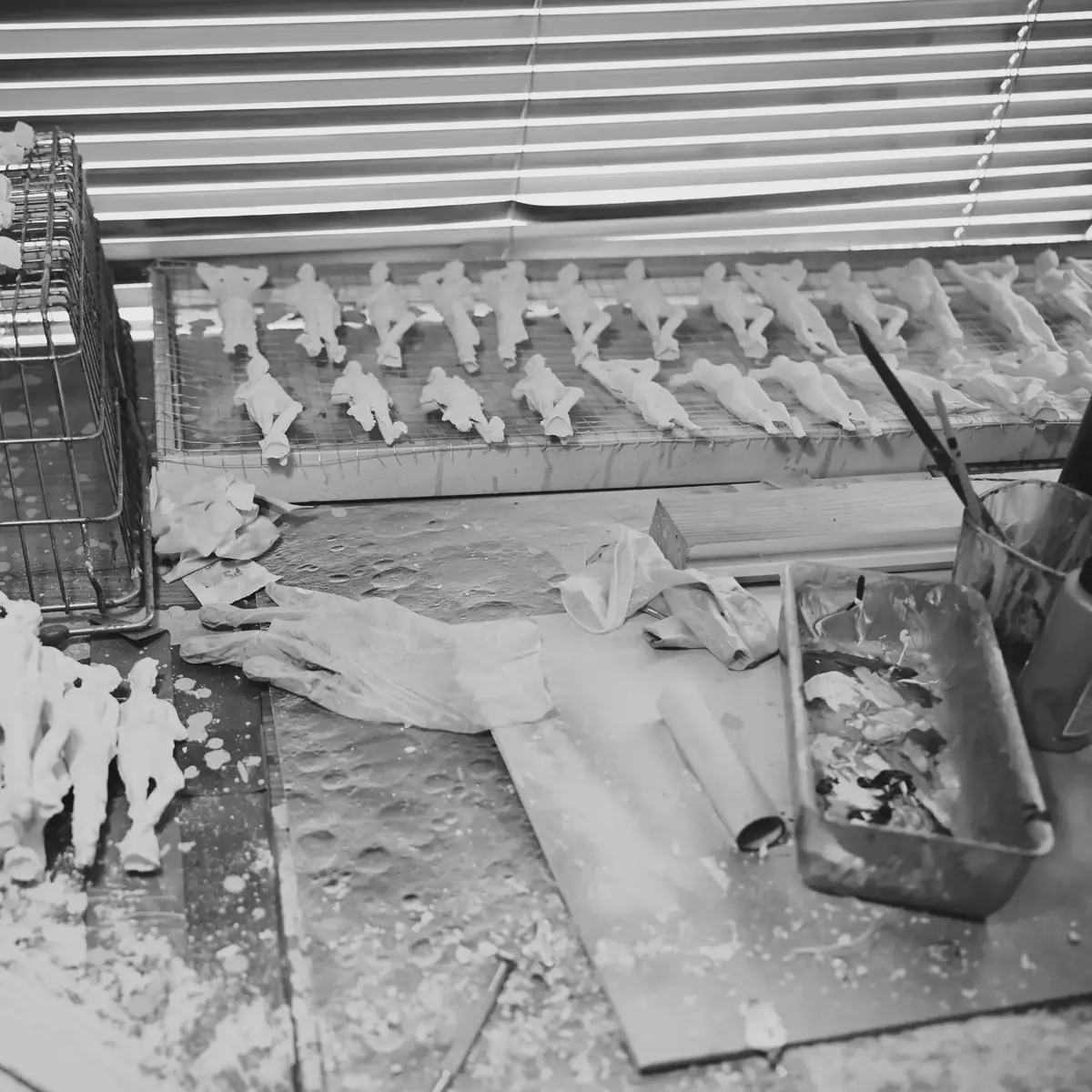
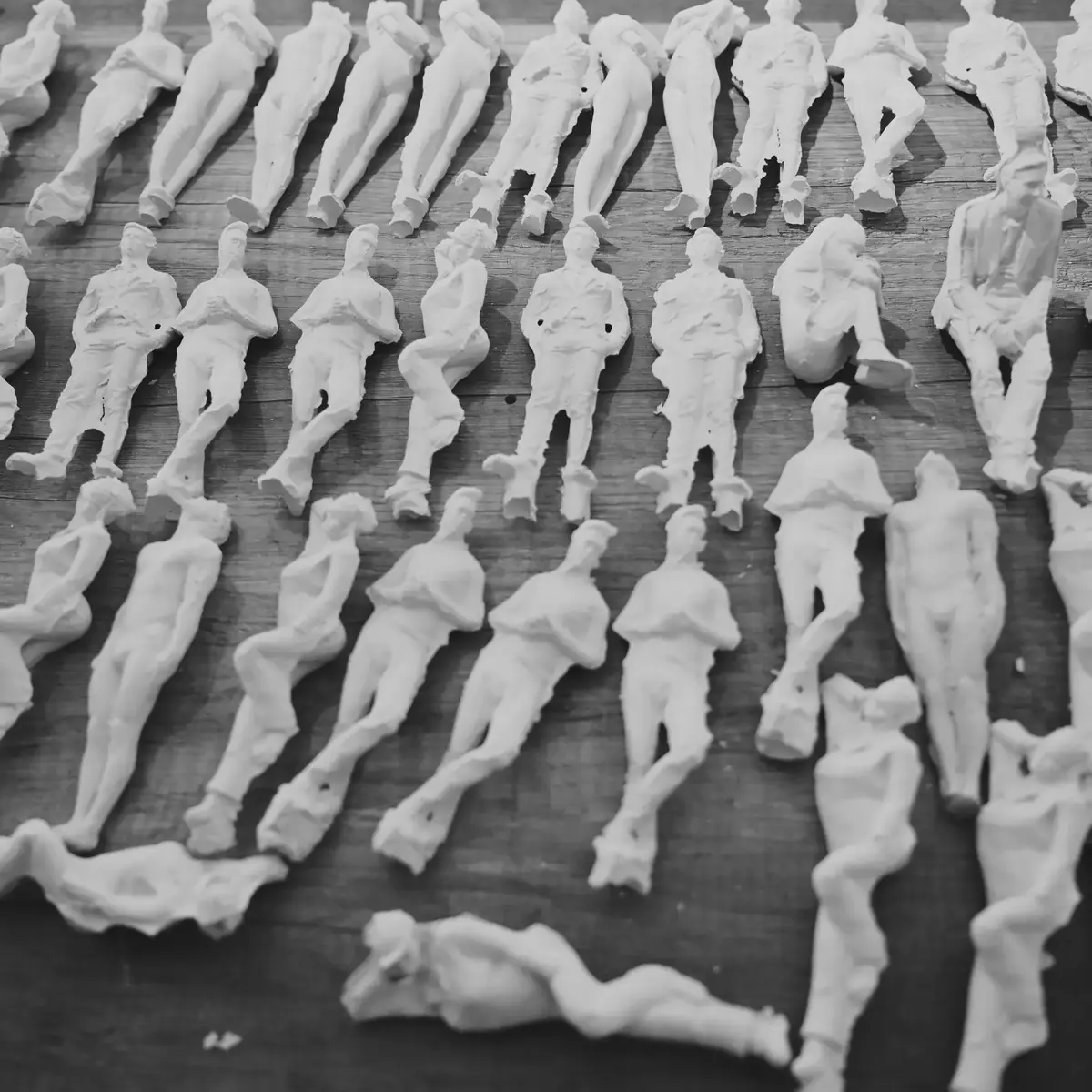
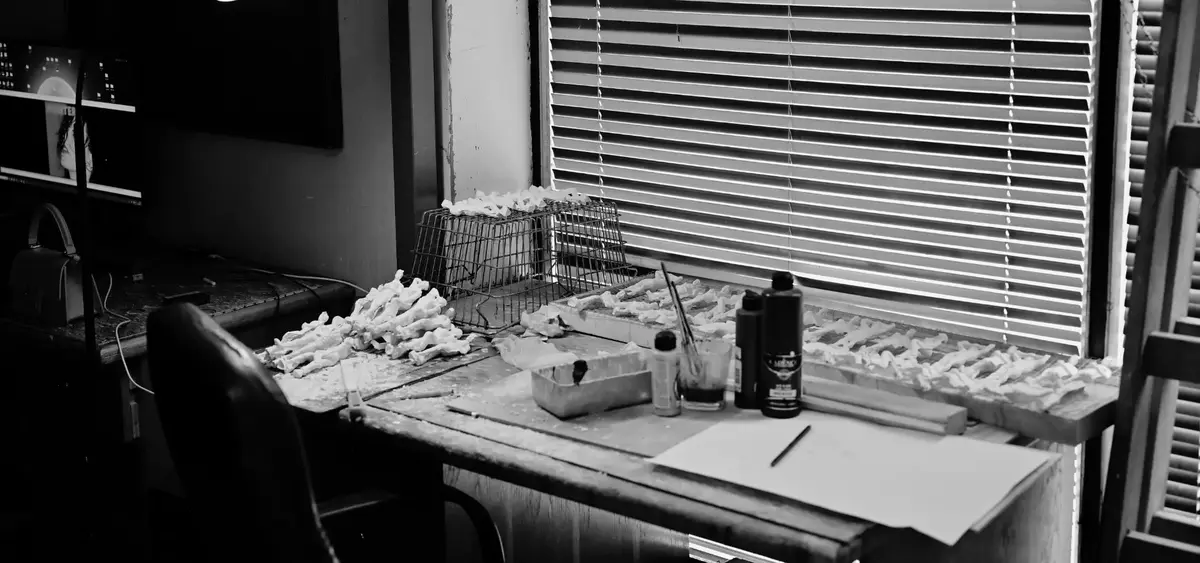
Out of the Blue, I’m Swept Away, 2025/2026 / figurines, detail
"What’s important to me is that everyone is from Montenegro. It was essential that this is truly our own production."
ZINA: What specific aspects of this piece are personal to you?
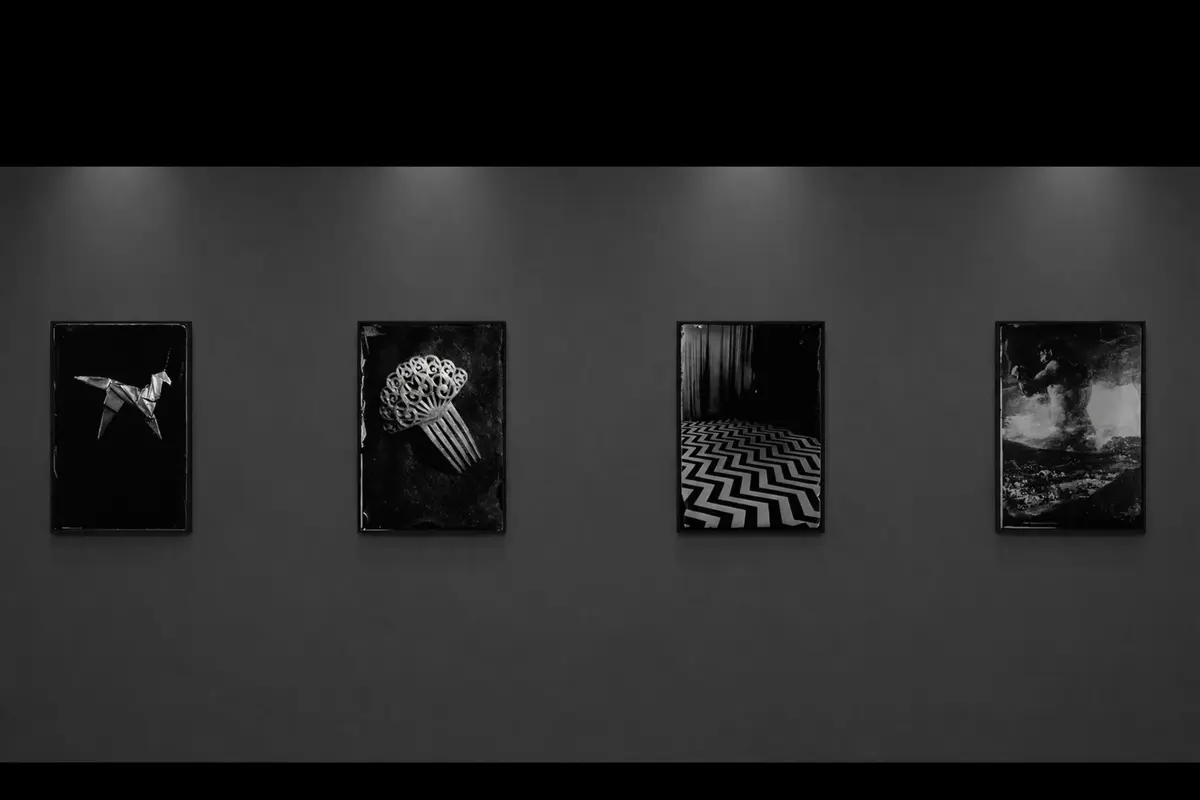
SINIŠA: Among other things, the figurines are very personal. A number of the 2,000 are custom-made and represent people from my life - friends, family, and those I know. There are also wet collodion photographs, personal objects, and stills from films that are important to me.
ZINA: Why did you choose this particular photographic medium?
SINIŠA: It was important that the photograph itself exists as a unique object—something that cannot be reproduced. It carries a certain presence on its own, and as an image on glass, it naturally connects to the installation. It’s essentially a piece of glass where nothing is visible until it’s placed against a surface. In that sense, it reflects the way memory works - how an image only becomes clear in relation to something else.
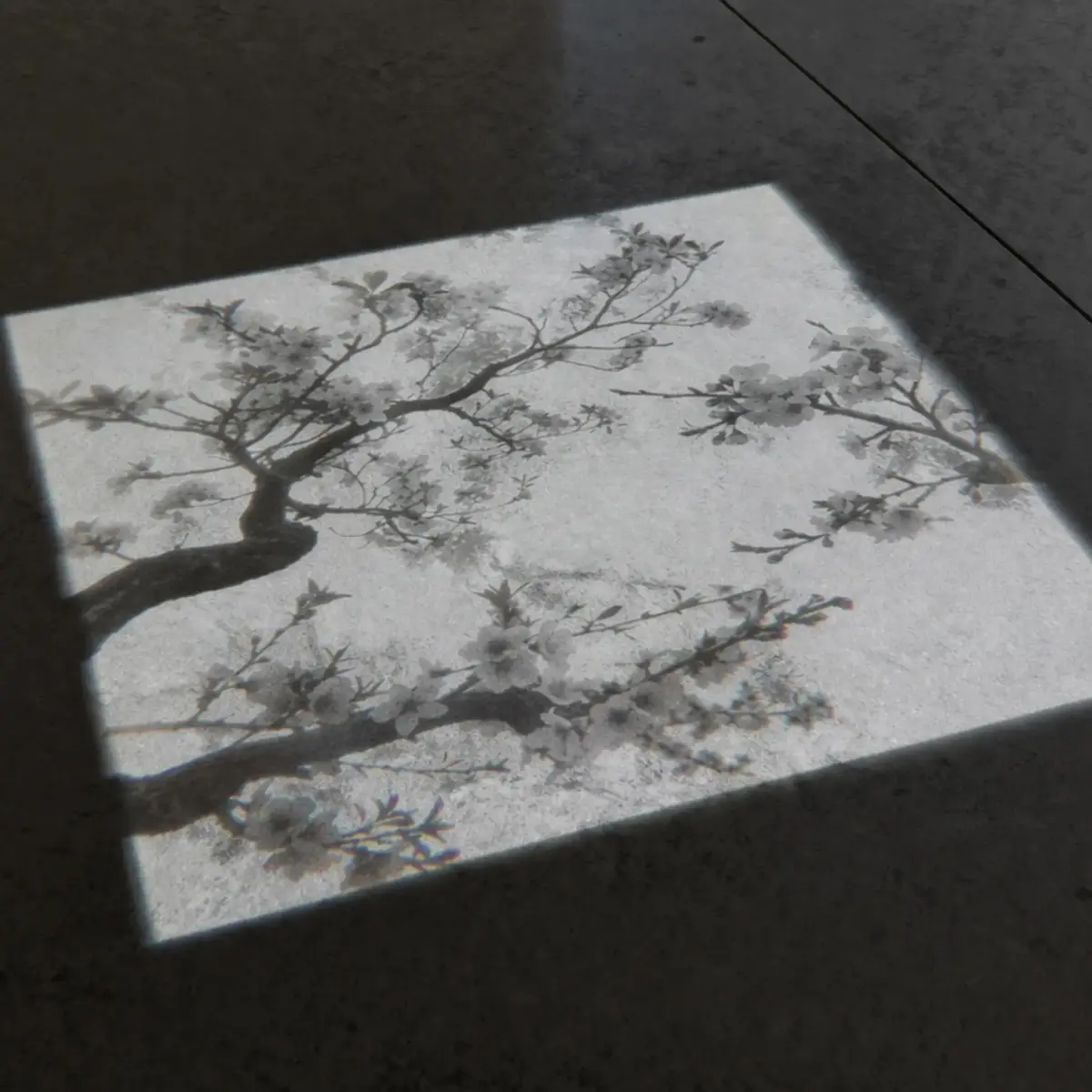
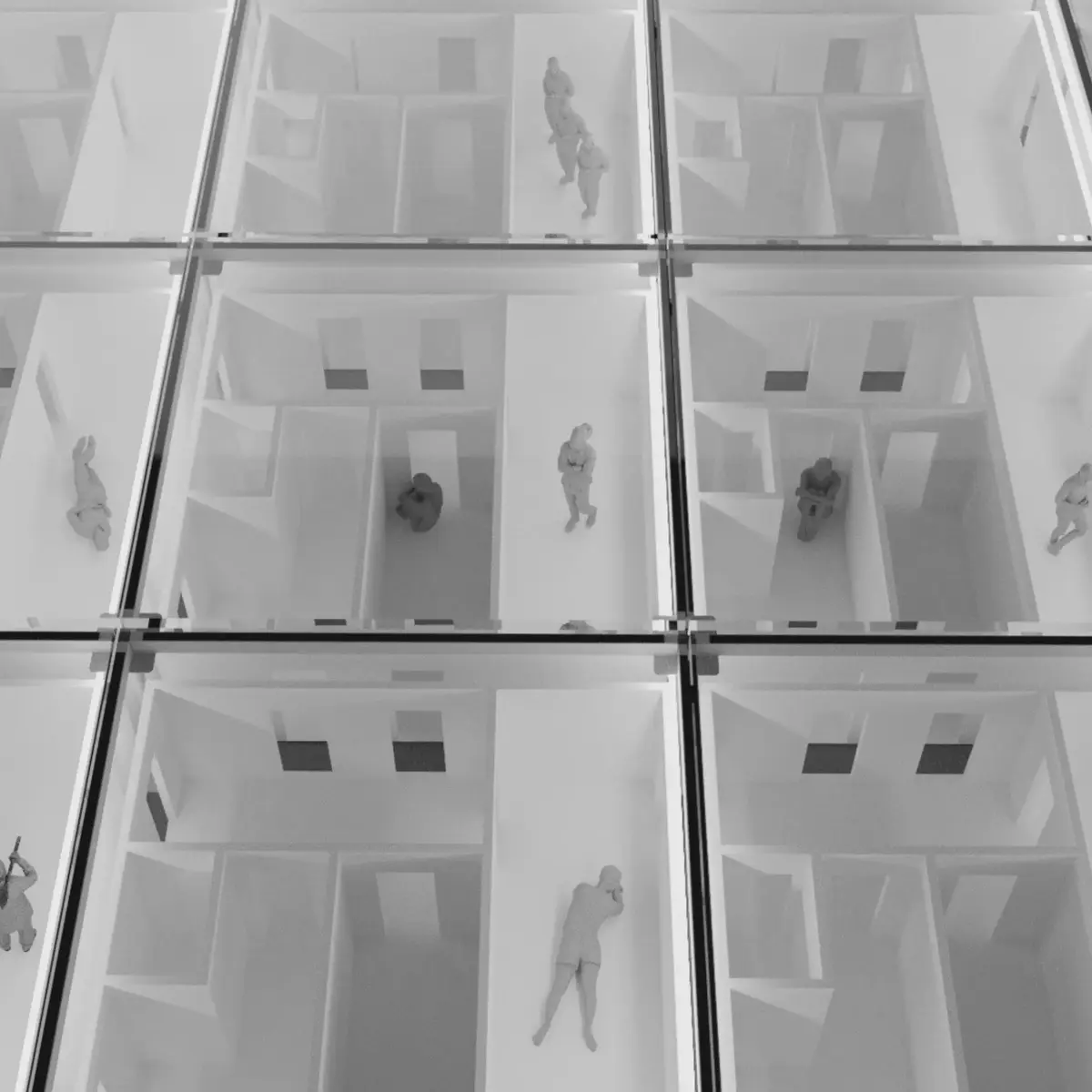
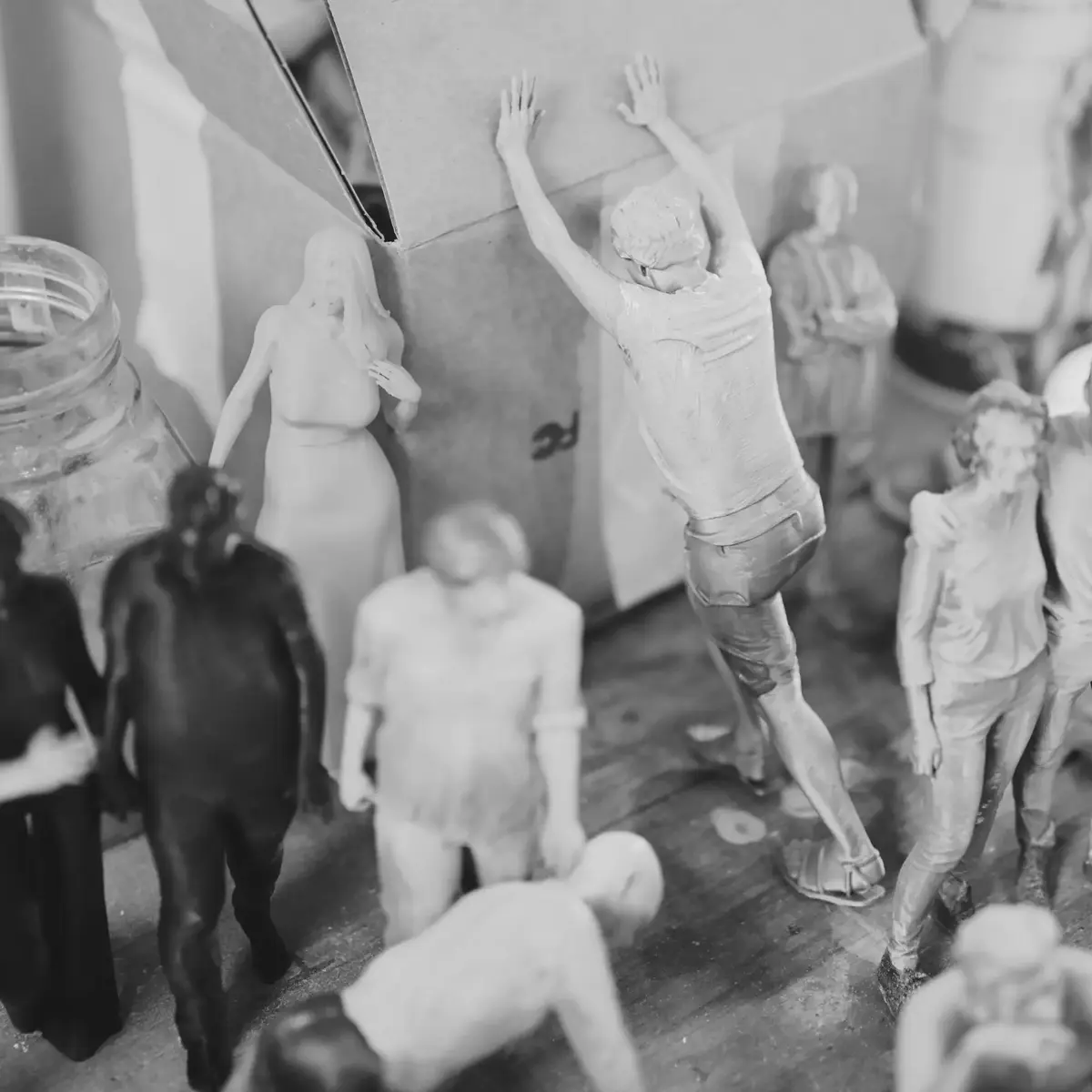
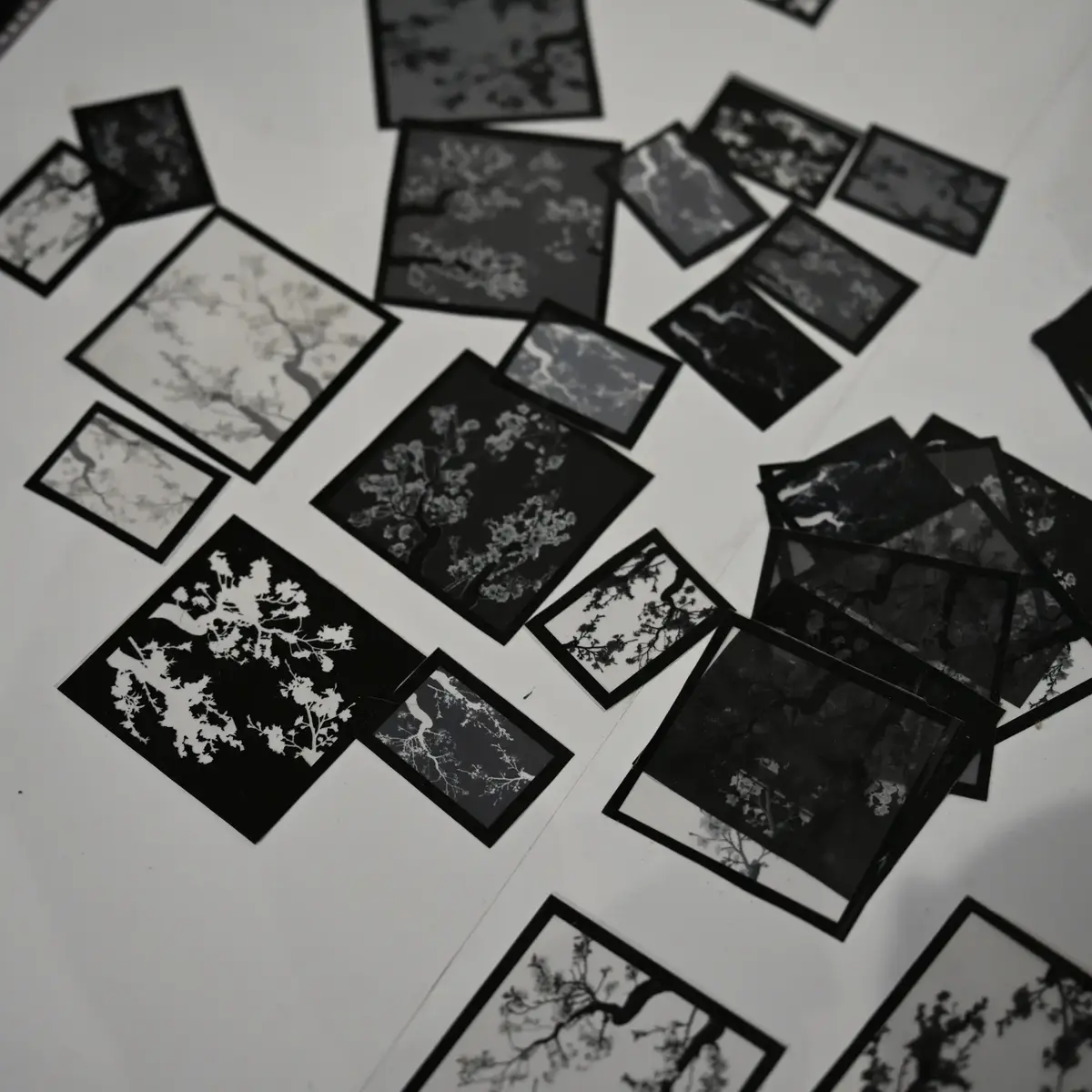
Out of the Blue, I’m Swept Away, 2025/ 2026 | details & process
ZINA: Do you see the art world as inherently elitist? Events like the Biennale, which demand substantial resources, highlight a clear divide between those who can access them and those who cannot. How do you position your work within that dynamic?
SINIŠA: It’s a very complex issue, especially considering the wide range of approaches to art - from highly commercial to deeply elitist. What often happens is that art becomes hermetic, created primarily for other artists and a narrow circle of insiders, rather than for a broader public.
This is particularly visible in smaller environments like ours, where there are only a few defined audiences for contemporary art. What concerns me most is that truly good art often reaches very few people - those who already understand and follow it. Then the question arises: what is the purpose if a wider audience cannot engage with it?
Venice becomes a stage where everything is visible, but it also raises another question - who can actually afford to be there? That’s the loop.
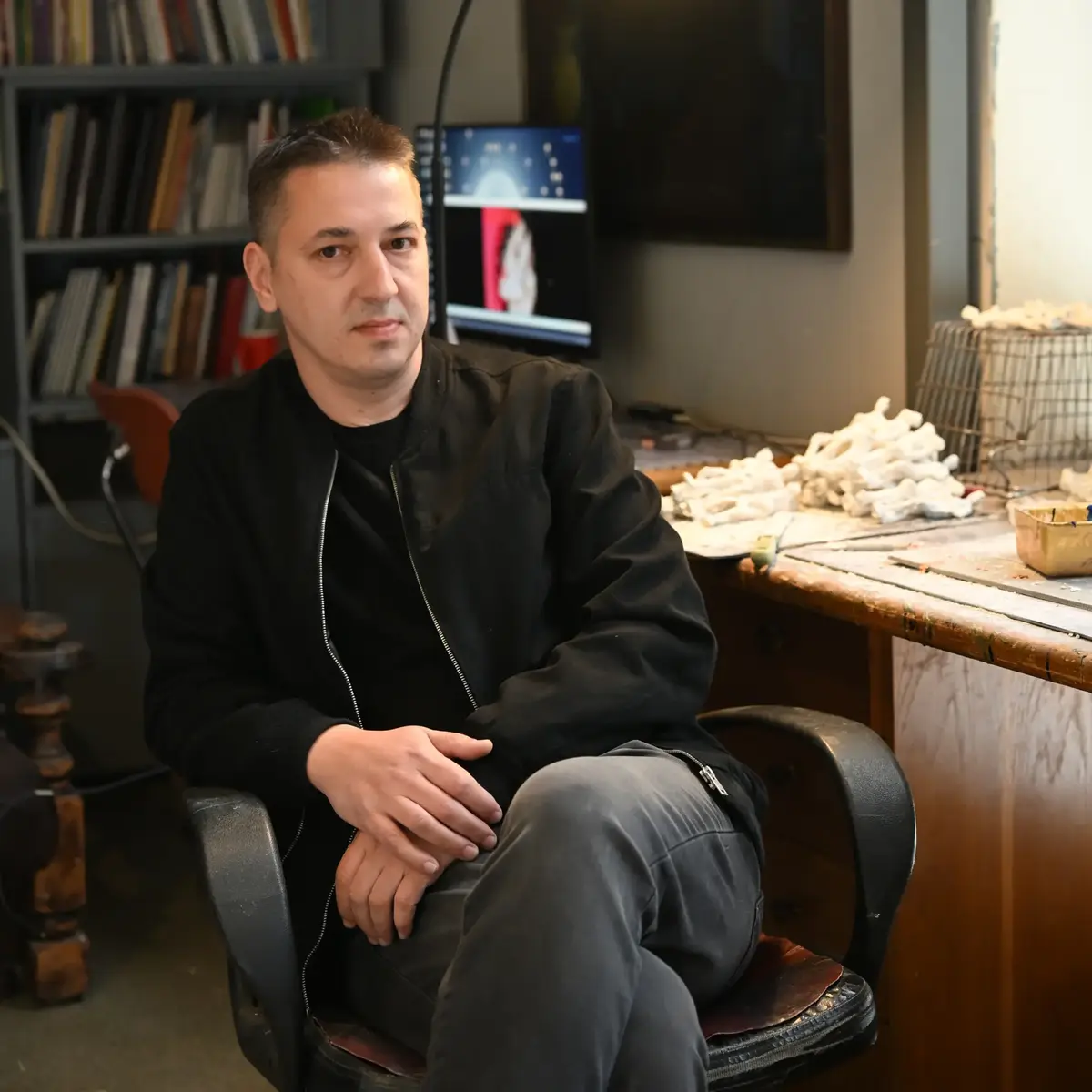
"For me, success is having the time, the freedom, and the will to create."
ZINA: How do you see the region today from an artistic perspective?
SINIŠA: The region has strong potential -it’s really a question of timing and momentum. It gained visibility after the war, which of course isn’t a good reason, but it created a moment where artists had something to respond to. Over time, that attention fades, the momentum declines, and shifts elsewhere.
This year’s Biennale is interesting in that context. “In Minor Keys,” curated by Koyo Kouoh, moves away from immediacy and current events, focusing instead on turning inward—toward more personal, emotional, and subtle voices. It’s an approach that is quite rare. In the end, this project should lead to a positive outcome - a kind of contrast that becomes clear once you step out of the installation.
"Out Of The Blue, I'm Swept Away" by Siniša Radulović
On view from May 9 - November 22, 2026
Location: Artenova in the Castello | Venice, Italy