Balkan Erotic Epic is one of Marina Abramović's most culturally rooted works, first presented in 2005 as a series of video performances that re-enacted traditional Balkan rituals dating back to pre-Christian folklore and rural customs. Now, two decades later, Abramović revisits the piece as a large-scale live performance created with choreographer Blenard Azizaj and durational performance director Billy Zhao - a collaboration she describes as the most ambitious production of her career so far.
In this exclusive conversation, Editor-in-Chief of FAB Zina Pusep speaks with Marina Abramović and Blenard Azizaj about the cultural roots of the work, the emotional language of the Balkans, and the collaboration that made it possible.
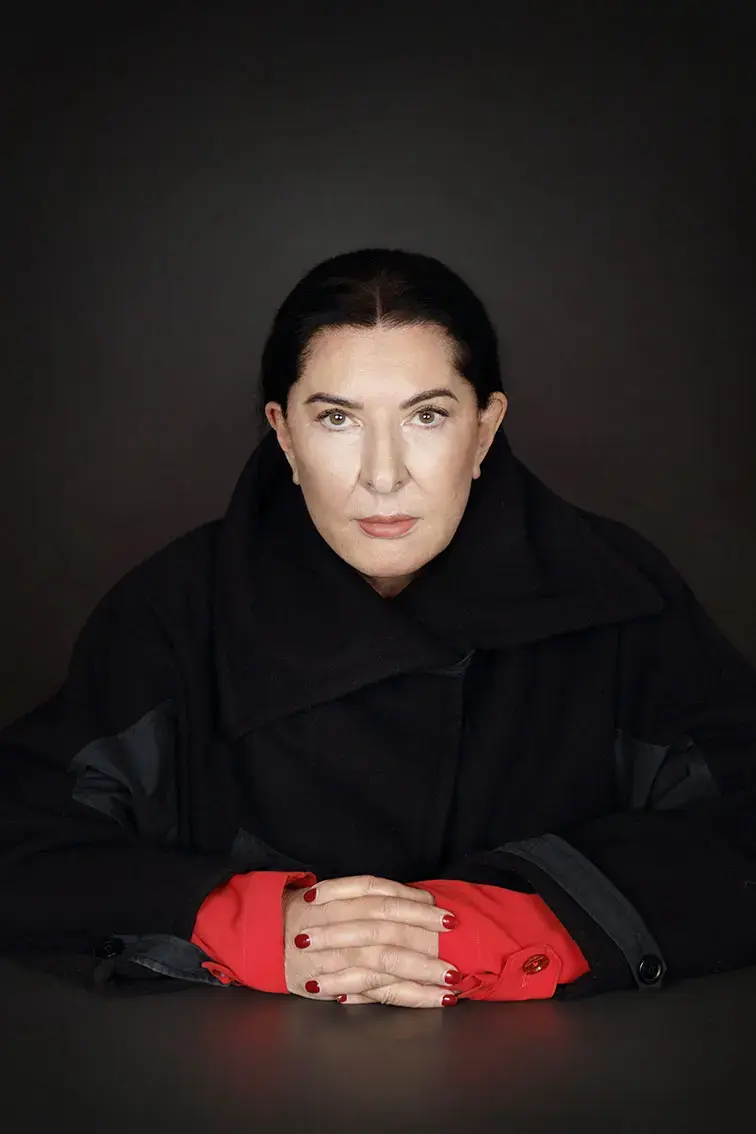
Marina Abramović | Photograped by Marco Anelli
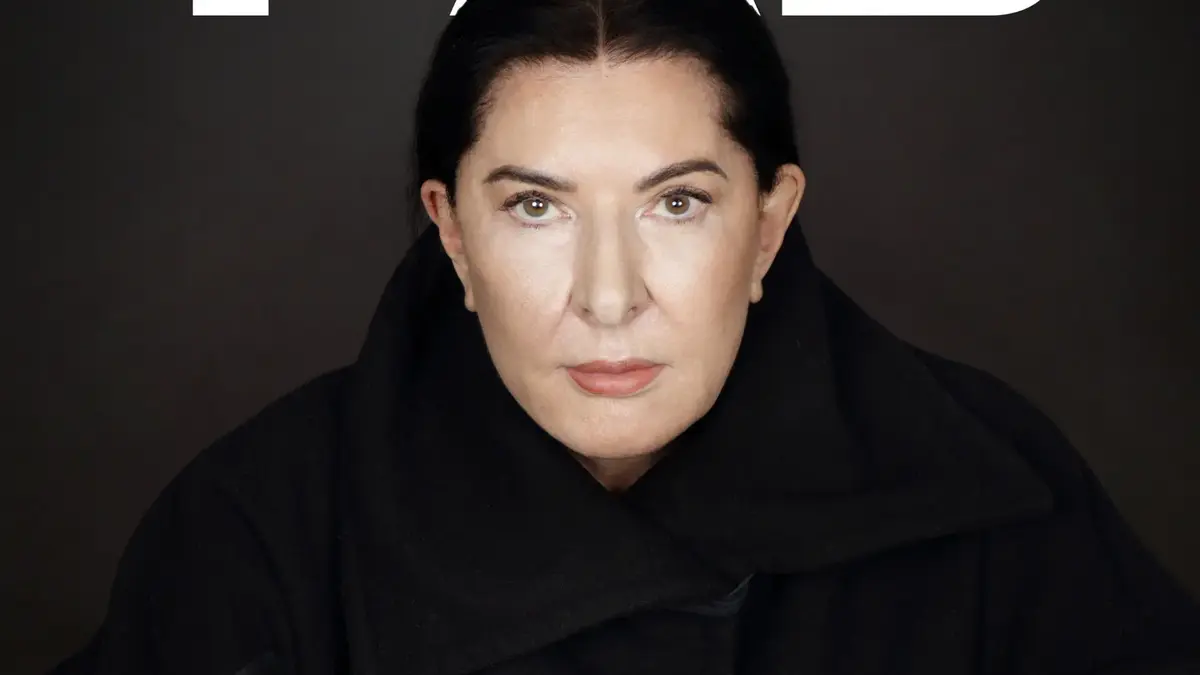
Marina Abramović - one of the most groundbreaking artists of our time.
Born in Belgrade, Former Yugoslavia, she is widely recognised for her extreme, often near-death and boundary pushing long-duration performances. Her early "Rhythm" works tested the limits of control and endurance - from repeatedly plunging a knife between her fingers, to performing inside a burning star structure until she collapsed from lack of oxygen.
Throughout her practice, her homeland remained an ever-present reference: in Balkan Baroque (1997), awarded the Golden Lion at the Venice Biennale, she spent days scrubbing bloody cow bones while singing folk songs from her childhood - a haunting confrontation with the turmoil unfolding in the Balkans during that time.
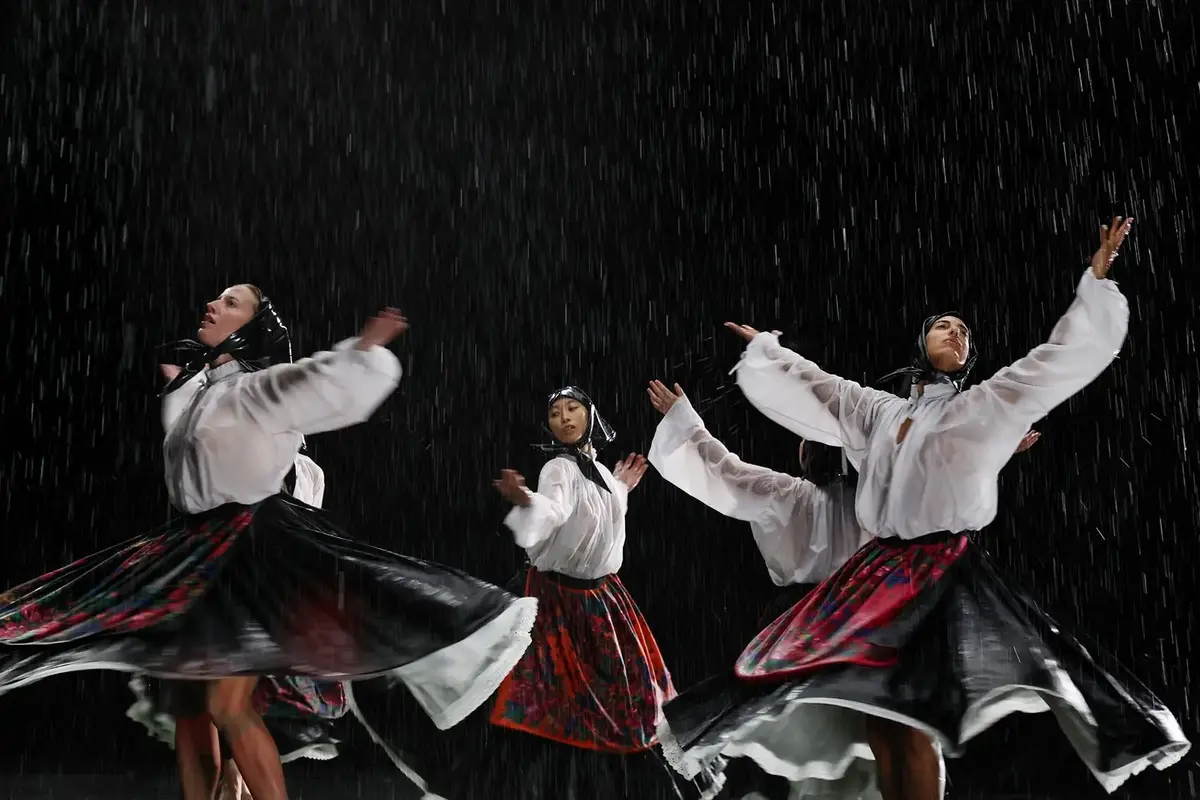
Balkan Erotic Epic (2025) | Photograped by Marco Anelli
While Marina was transforming the art world, some of us weren't even born yet. That includes Blenard Azizaj - contemporary Albanian choreographer and dancer, known for his powerful presence and emotionally charged movement vocabulary.
Together, they revisited Balkan Erotic Epic.
Originally presented in 2005, the piece re-enacted traditional Balkan rituals. In these traditions, the human body was belived to communicate directly with nature and influence the forces, playing an active role in practices connected to fertility, protection of the household, seasonal cycles - such as the practice of women lifting their skirts toward the sky to stop the rain.
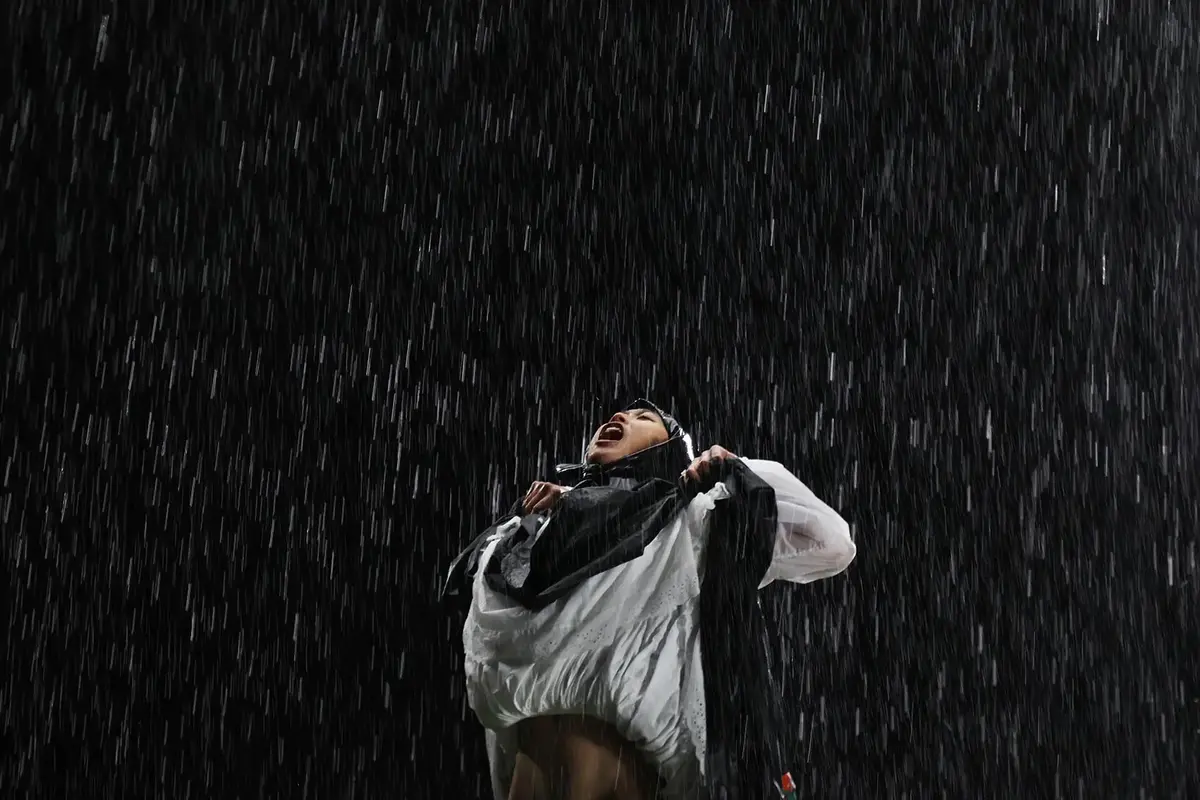
Balkan Erotic Epic (2025) | Photograped by Marco Anelli
In 2025, working alongside Blenard Azizaj and durational performance director Billy Zhao, Abramović reimagined the piece as a four-hour live performance structured across thirteen scenes and involving seventy performers. The scenes include a wide range of unsettling practices. Black Wedding - a ritual when a young, unmarried deceased man is symbolically wedded to a living young woman, to ensure the soul has a partner in the afterlife. There are knife dances, pregnant woman being soaked in milk.
There is a funeral of the former president of Yugoslavia - Tito. The list goes on.
This collaboration marks a historic moment in art: for the first time, long-duration performance was woven together with contemporary choreography, resulting in a new form of art.
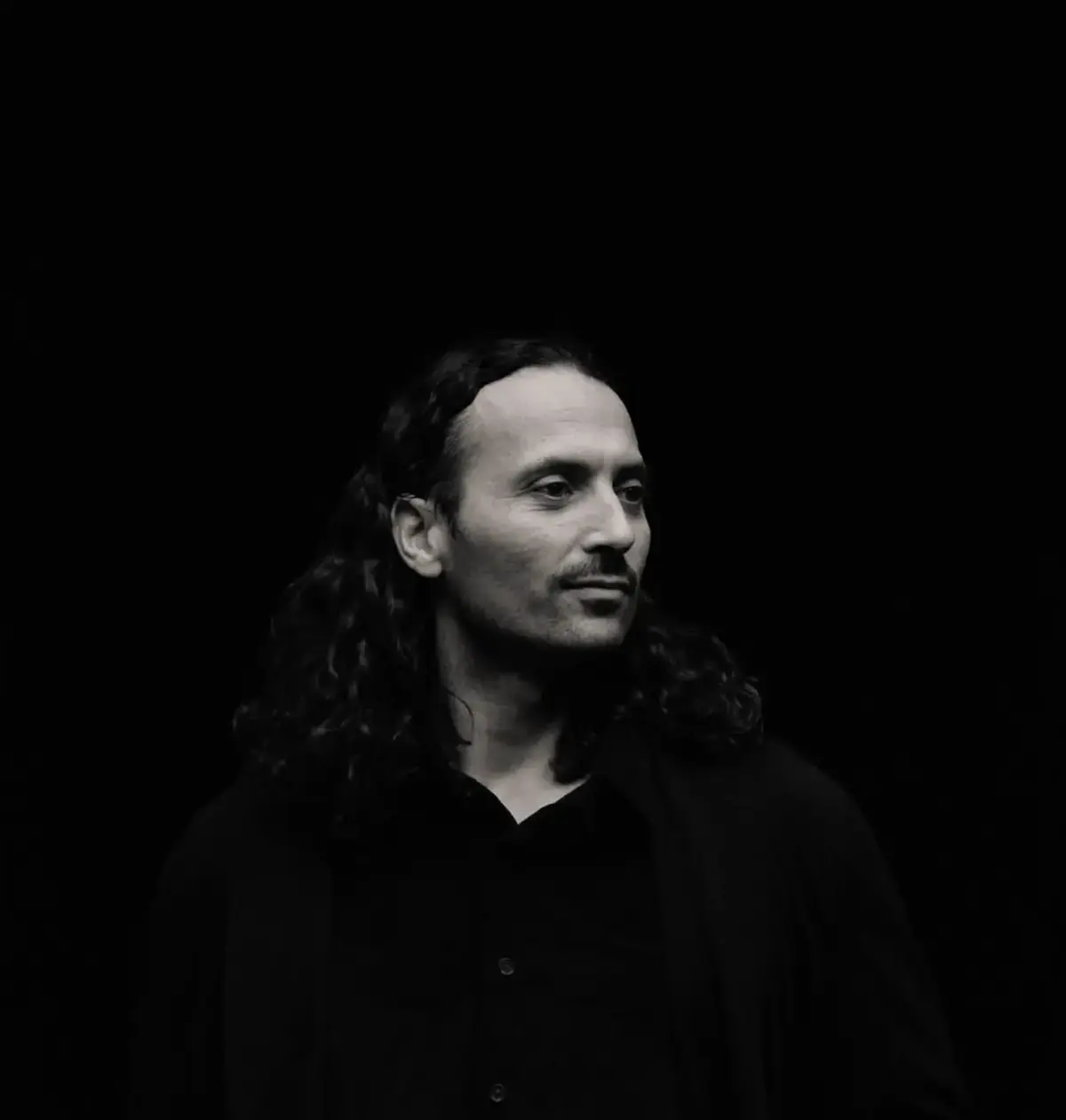
Blenard Azizaj | Photograped by Rowan Schratzberger
Ten days before this interview took place, I didn't know Blenard, nor did I know Marina. What was present, though, was a friend's advice: write down thoughts on paper daily. One night, after writing a list ranging from ideas about spirituality to my hair goals, I closed my notebook and went to sleep.
Minutes after came one more line: "Marina Abramović". It wasn't that deep, just a thought of her name, maybe a subconscious association with spirituality and luscious hair.
I was already familiar with Balkan Erotic Epic (2005) from my Fine Art studies in the Netherlands, making it one of my favourite references. Seeing this piece taking a new form in 2025 brought a genuine spark of excitement. Around the same time, a conversation with my friend Ana led to a special introduction: Blenard, and the next thing I knew this conversation was taking shape. Sometimes we act without logic, and sometimes paths cross without planning - guided by instincts that feel older than reason.
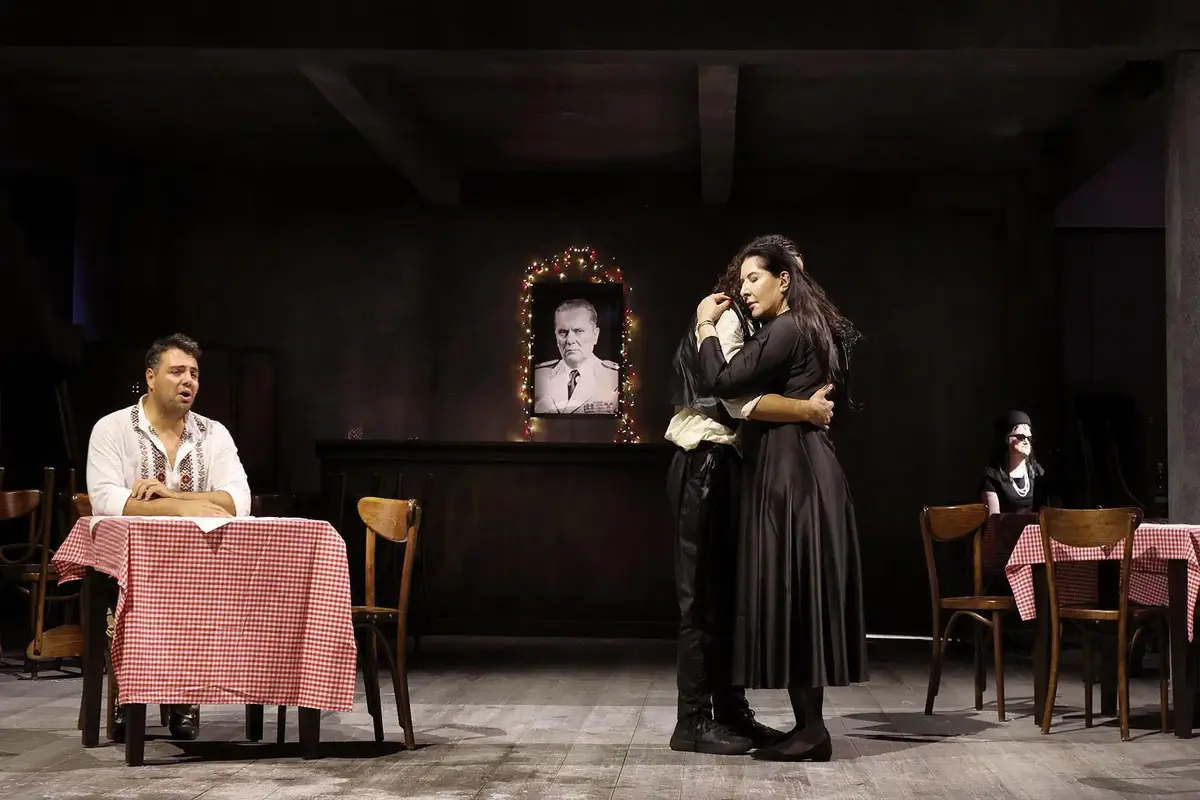
Balkan Erotic Epic (2025) | Photograped by Marco Anelli
Returning to Balkan Erotic Epic
Zina: It's been twenty years since the original Balkan Erotic Epic. How did it begin, and why return to it now?
Marina: This idea started a long time ago, right after I made 'House with the Ocean View' (2002) - the performance where I spent twelve days not eating, not speaking and being fully exposed to the public.
It was a very spiritual and demanding work. And right after that, one curator asked if I would like to do something about erotic and pornography.
He asked twelve different artists including Matthew Barney, Sam Taylor-Wood, Marco Brambilla, and others. I am always interested in trying something new and after such a spiritual performance, this seemed like something completely different and contrasting.
However, I found pornography incredibly boring. There are millions of films and they all look the same. The only exception was Cicciolina, she made interesting video works out of it. I like Cicciolina. So I tried to understand what I could connect to and the only way I could approach this topic was through my own culture.
I went to the Balkans, worked with the production house Bas Celik, auditioned people, and made a twelve-minute video work based on Balkan erotic rituals. I enjoyed it so much. But it was a small team, a small format. For decades, I wanted to make it much bigger, but never got the right opportunity. My works often take decades - 'Seven Deaths of Maria Callas' (2020) took 30 years, 'The Lovers' (walking the Great Wall of China), took 8 years, and 'Balkan Erotic Epic' took about 20. Over time, I gained more wisdom and a broader perspective - not only toward ex-Yugoslavia, but the region as a whole: Albania, Bulgaria, Romania, North Macedonia. I became more interested in the larger map of the Balkans. So now was the moment to return.
"I found pornography incredibly boring."
I went to the Balkans, worked with the production house Bas Celik, auditioned people, and made a twelve-minute video work based on Balkan erotic rituals. I enjoyed it so much. But it was a small team, a small format. For decades, I wanted to make it much bigger, but never got the right opportunity. My works often take decades - 'Seven Deaths of Maria Callas' (2020) took 30 years, 'The Lovers' (walking the Great Wall of China), took 8 years, and 'Balkan Erotic Epic' took about 20. Over time, I gained more wisdom and a broader perspective - not only toward ex-Yugoslavia, but the region as a whole: Albania, Bulgaria, Romania, North Macedonia. I became more interested in the larger map of the Balkans. So now was the moment to return.
"The only way I could approach this topic was through my own culture."
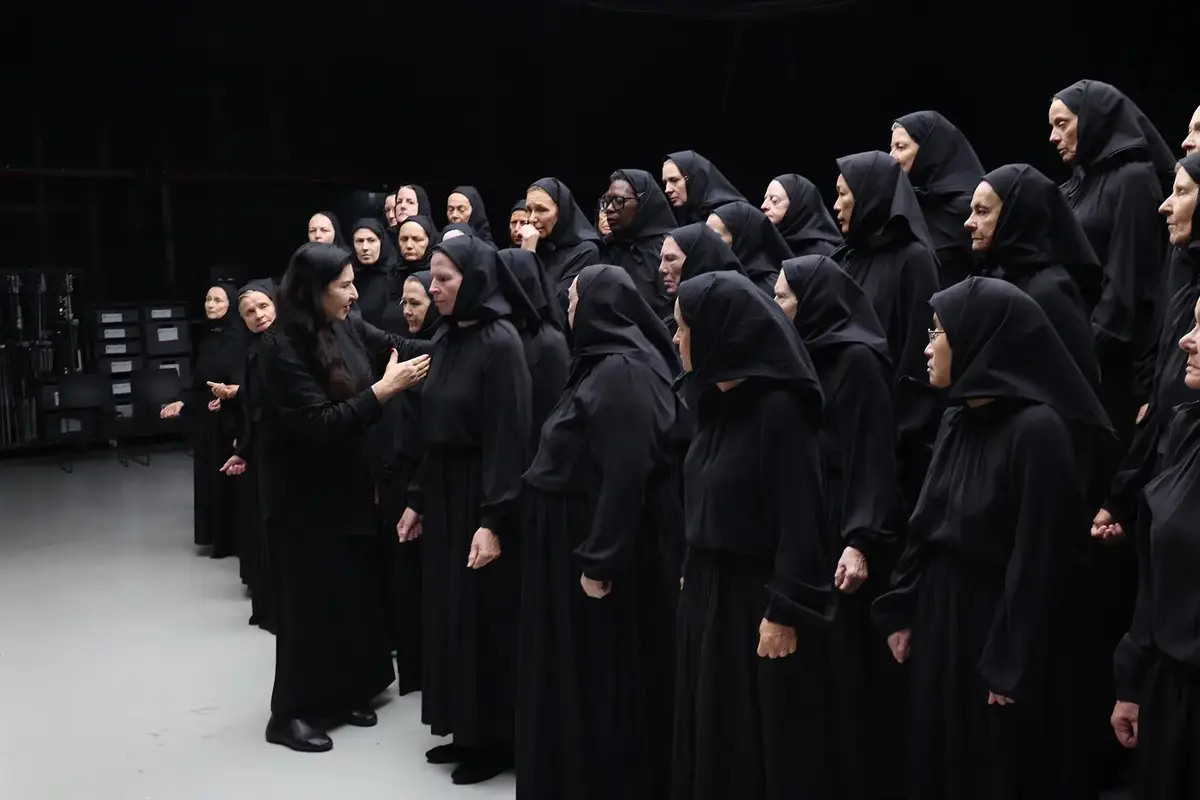
Balkan Erotic Epic (2025) | Photograped by Marco Anelli
How the collaboration began
Blenard: It actually started in Berlin, at Funkhaus, after a concert by Teodor Currentzis. There was an afterparty where I met Luka Kozlovaki and Marko Nikodijevic - the composers of Balkan Erotic Epic. The music was mesmerizing. When something is truly authentic, I react immediately. I started dancing. I couldn't stop. I was amazed like a child. I told them I am a choreographer, we exchanged Instagrams, and that was it. We didn't meet again, no coffee, no plans.
Shortly after, Marina was looking for a choreographer from the Balkans. Luka mentioned me. Her executive producer called me, but I don't answer unknown numbers, so I didn't pick up. Can you imagine? I get a call to work with Marina Abramović and I don't pick up the phone. Then her executive producer emailed me and said that Marina had seen my work and wanted to talk.
"Can you imagine? I get a call to work with Marina Abramović and I don't pick up the phone."
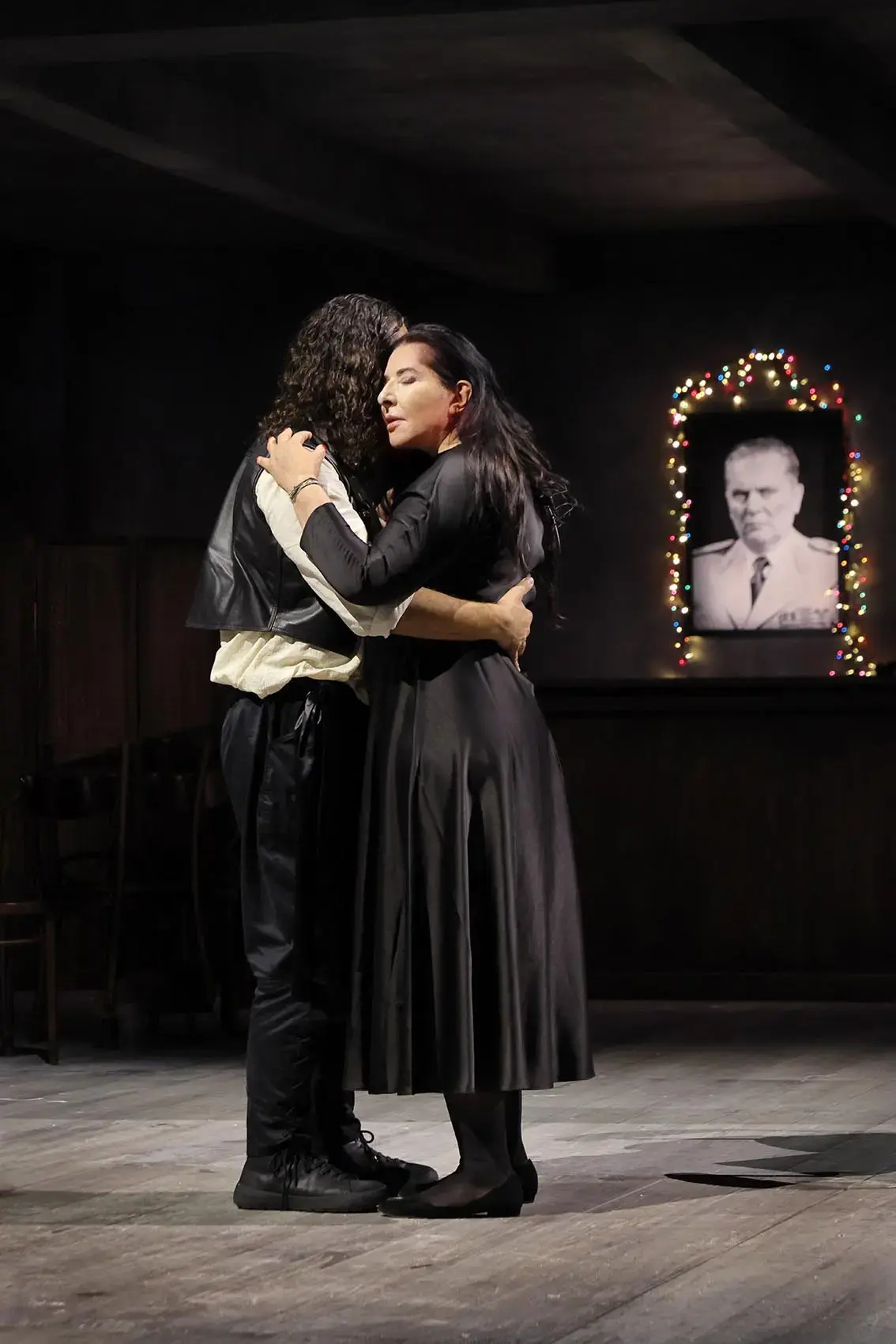
Marina Abramović & Blenard Azizaj, Balkan Erotic Epic (2025) | Photograped by Marco Anelli
Marina: I saw him on Zoom. I looked at what he was doing. And the fact that he is Albanian - and historically we have been positioned as "natural enemies" - made it even more interesting. I thought: Let's put these two things together and make something incredibly interesting. I didn't want to work with someone outside the Balkans. That is not easy to find.
When I saw Blenard's energy, I thought, this is the right person. And I was right. I have a long history with collaboration. My first major collaboration was with Ulay - twelve years of love, hate, forgiveness, everything. After that I said I would never collaborate again. But of course we say something and then do some- thing completely the opposite. So I did collaborate. With Jan Fabre. With Damien Jalet and Sidi Lari. But collaboration only works when there is no ego. And very often, there is ego.
"The fact that he is Albanian - and historically we have been positioned as 'natural enemies' - made it even more interesting."
With this piece, it was different. First of all, Blenard is incredibly talented. And second, he does not have ego the size of the Himalayas. For him, just like for me, it's not important who is doing what, what's important is the final result. We put all this together to create something unbelievable and special. This work was created by the three of us: Blenard, Billy Zhao and myself. Without the three of us, it would not exist. Billy is Chinese, but Billy started working with me when he was 17. So he really understands the core of my method, what long-duration work means.
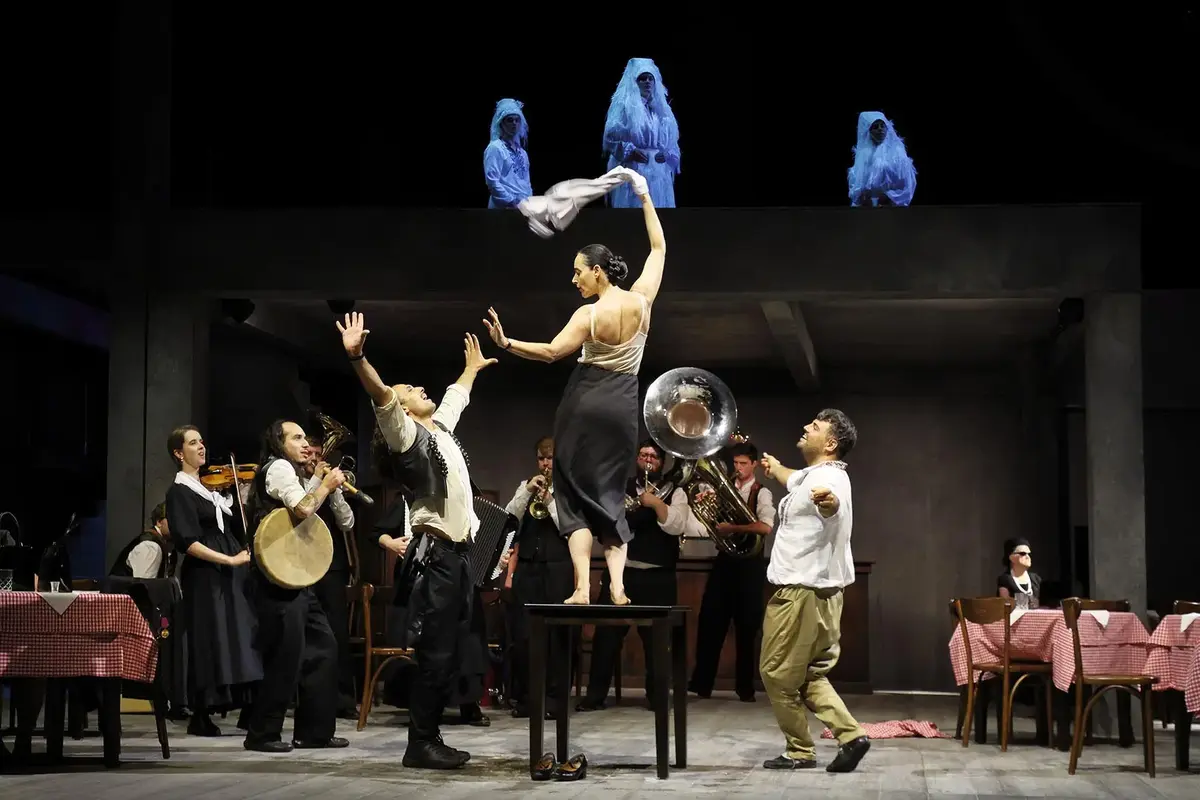
Balkan Erotic Epic (2025) | Photograped by Marco Anelli
Blenard: Working with Marina in this production taught me patience. In dance, everything is about structure and constant movement. In long-duration performance, time expands. Stillness is part of the work. Marina helped me understand how to stay, how to hold space. We learned from each other. Looking back now, it feels like something you experience only once in a lifetime. We even expected negative criticism because Marina's work is often misunderstood. And then there were none. It was a shock. In the best way.
"Looking back now, it feels like something you experience only once in a lifetime. "
Marina: In Balkan Erotic Epic we have a unique mix of long duration performance with dance. That has never happened. It is historically the first form of its kind. And that's where we have to be acknowledged really. It s a new form of art.
"Collaboration only works when there is no ego."
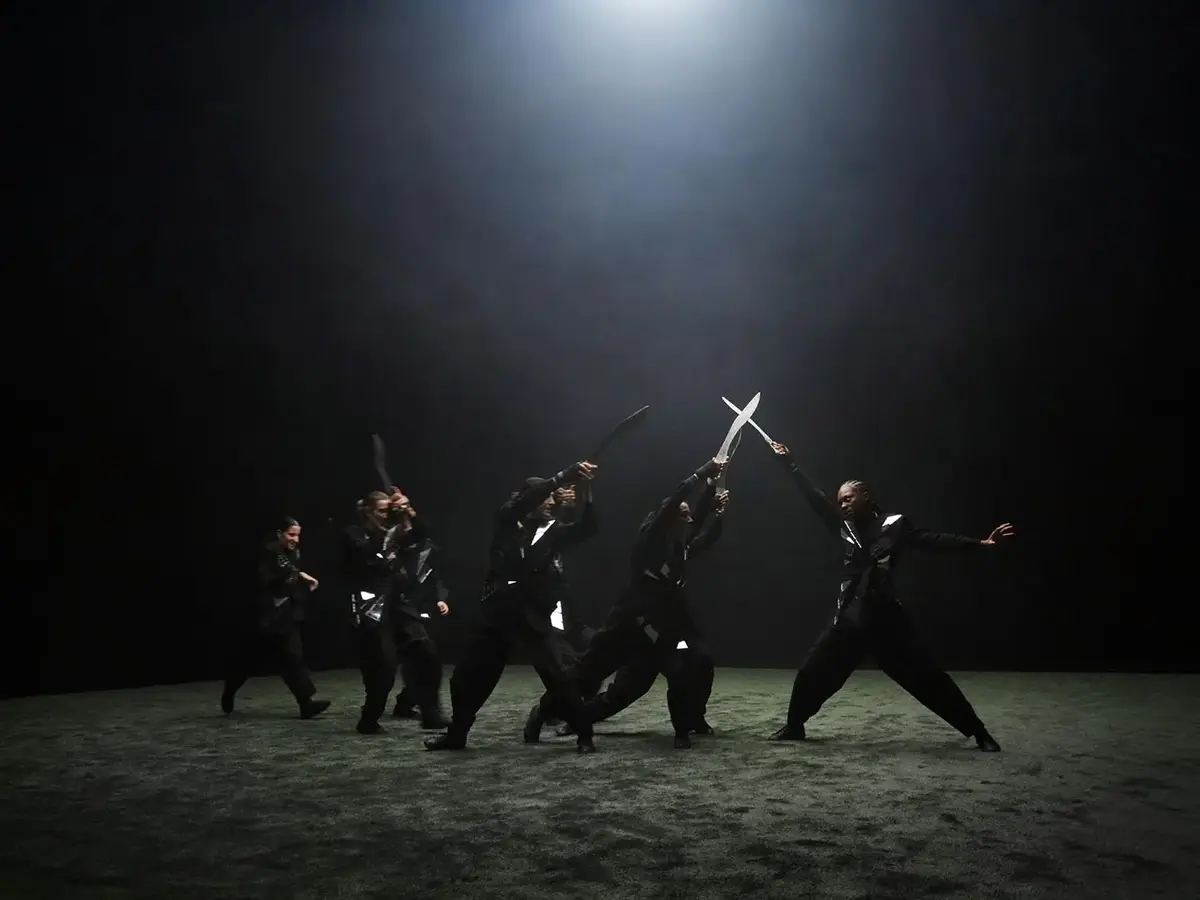
Balkan Erotic Epic (2025) | Photograped by Marco Anelli
Research behind the work
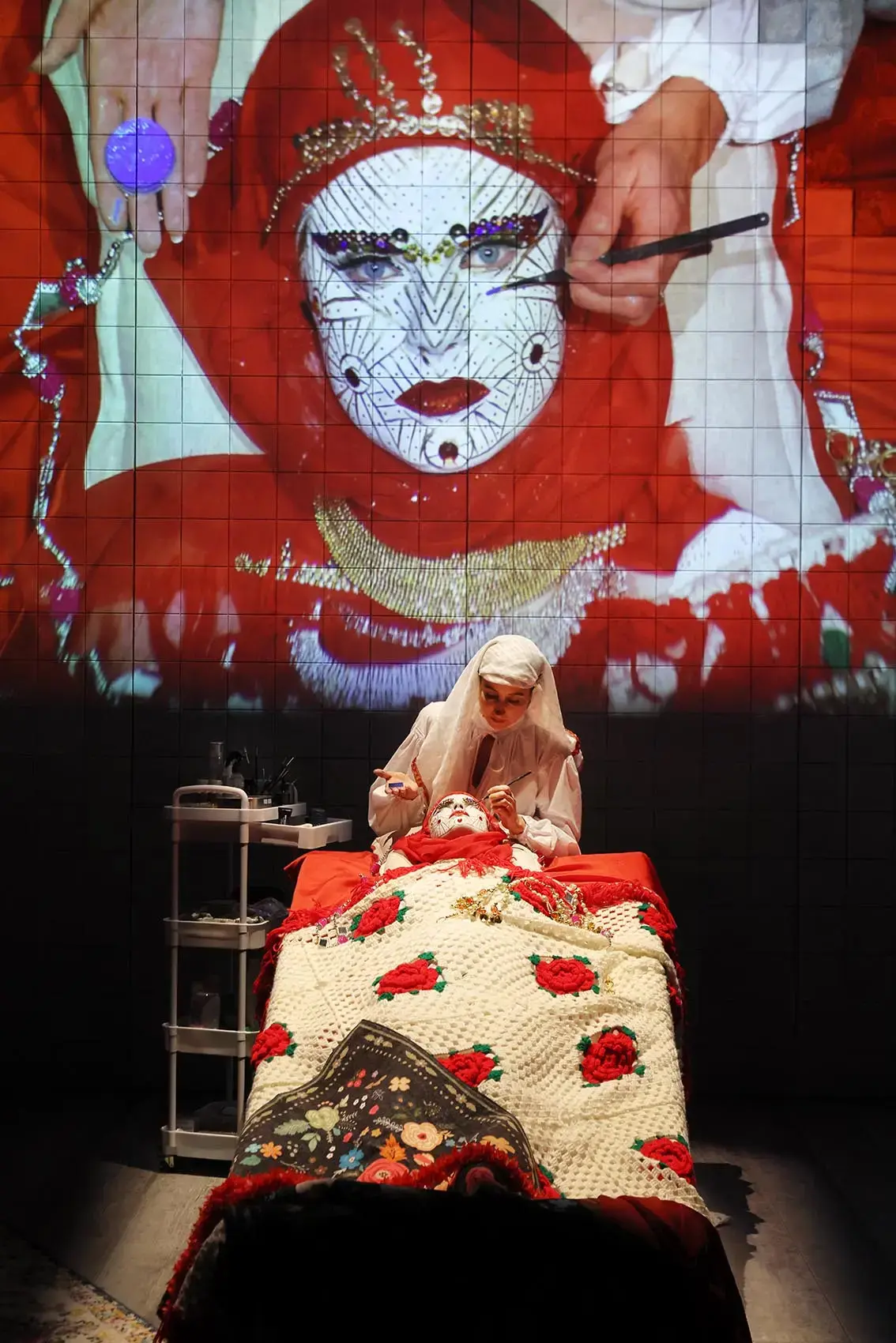
Zina: The Balkans are a mosaic of traditions - from Orthodox Christianity to pagan layers and Ottoman influences. In the piece we see funeral rituals, knife dances, interactions with skeletons. Many scenes in the performance reference rituals most of us have never encountered. What kind of research shaped this work?
Marina: The last 20 years I researched everything I could. I also asked others to research for me. I worked with an an- thropologist in Montenegro, and with people in other regions. Everyone was collecting stories and knowledge about rituals, also in Greece and Turkey. I even asked Blenard about rituals from Albania. I focused on rituals where the body was used symbolically in connection to agriculture, fertility, and protection. These practices were tied to survival - working the land, protecting the home, ensuring continuity. I read everything I could find -academic studies, local stories, archival notes, oral histories. Some were interesting, some were boring, but together they formed a picture.
Balkan Erotic Epic (2025) | Photograped by Marco Anelli
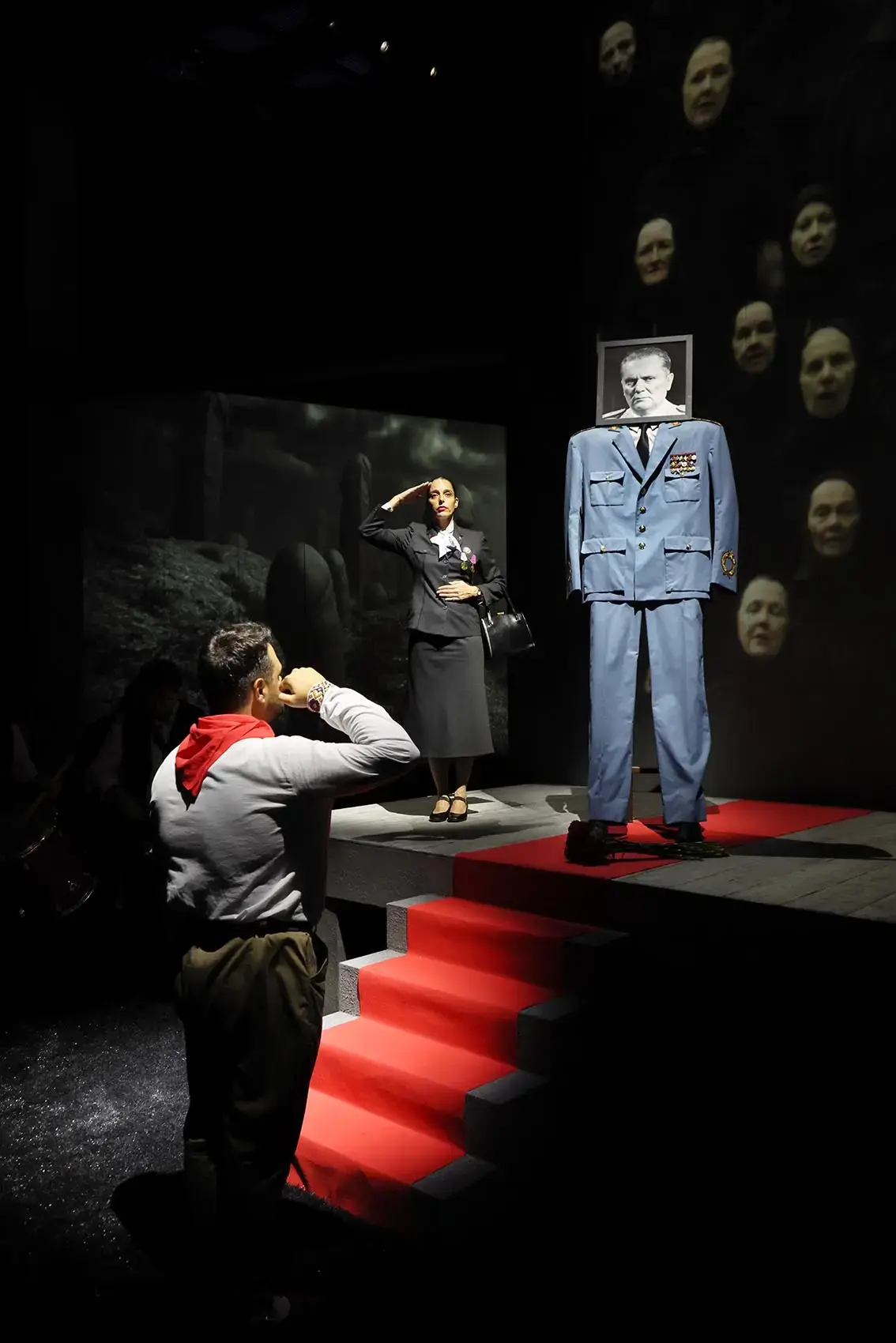
Zina: Among many symbols and references, there is the appearance of Tito - Former President of the Socialist Federal Republic of Yugoslavia. What does his presence represent in the piece?
Marina: Tito is everywhere in this piece. In photographs, in the small funeral part. The mourning of Tito to me marks something very ending of the one period of my childhood, in my memories - the end of the country I loved so much. It was such an important moment, everything changed. But also Tito was a possibility to put Orthodox religion together with the communism and with paganism. It is a phenomenon. You never see all of them simultaneously going on, and everyone was pretending the other thing doesn't exist. And that was why for me Tito was such an important focus.
Balkan Erotic Epic (2025) | Photograped by Marco Anelli
Body and Technology
Zina: For both of you, your primary medium has always been the body. If there comes a time when your body changes or can no longer endure performance in the same way, what happens then?
Marina: When you get to my age, you will understand. I am not a superwoman. I just had a knee transplant, and then Blenard says, "Let's dance," and I think, he's trying to kill me. But you do what you can do. I share my knowledge with younger generations. I have sixty years of experience in performance and now I pass that on. Every stage of life has its own function. When I performed "Seven Deaths of Maria Callas', I did the whole second part, but in a way my body could handle. I can lie in bed, stand up, break a vase, open a window, leave the stage, return as a ghost of Maria Callas. I can do that even when I am 103. We must age gracefully.
Zina: And Blenard, a slightly different body-related question for you: what do you think of the technology and its relation to the performance, especially artificial intelligence?
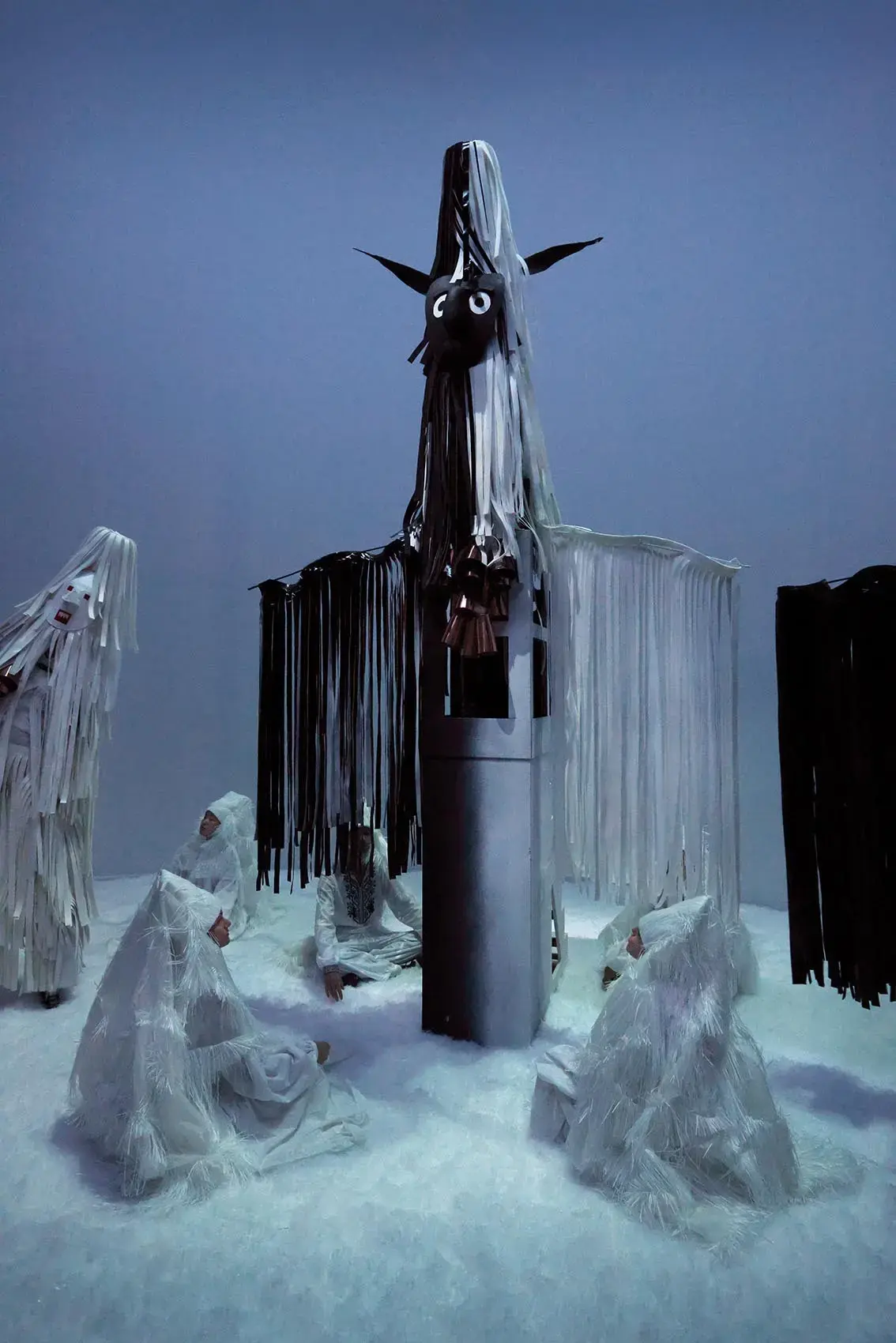
Blenard: We live in a completely different world now. Al can generate images, videos, even performance. It creates confusion about what is real and what isn't. Al is powerful and offers creative possibilities, but it removes what is uniquely human - intuition, vulnerability, real emotional presence. A performer cannot be replaced. Al can assist, but it cannot replace the irreplaceable. The creation of Balkan Erotic Epic in the studio itself took one month and fifteen days. It was one of those experiences you live only once - all the emotions were there: joy, exhaustion, love, frustration, grief, memory. You cannot artificially replicate that.
Balkan Erotic Epic (2025) | Photograped by Marco Anelli
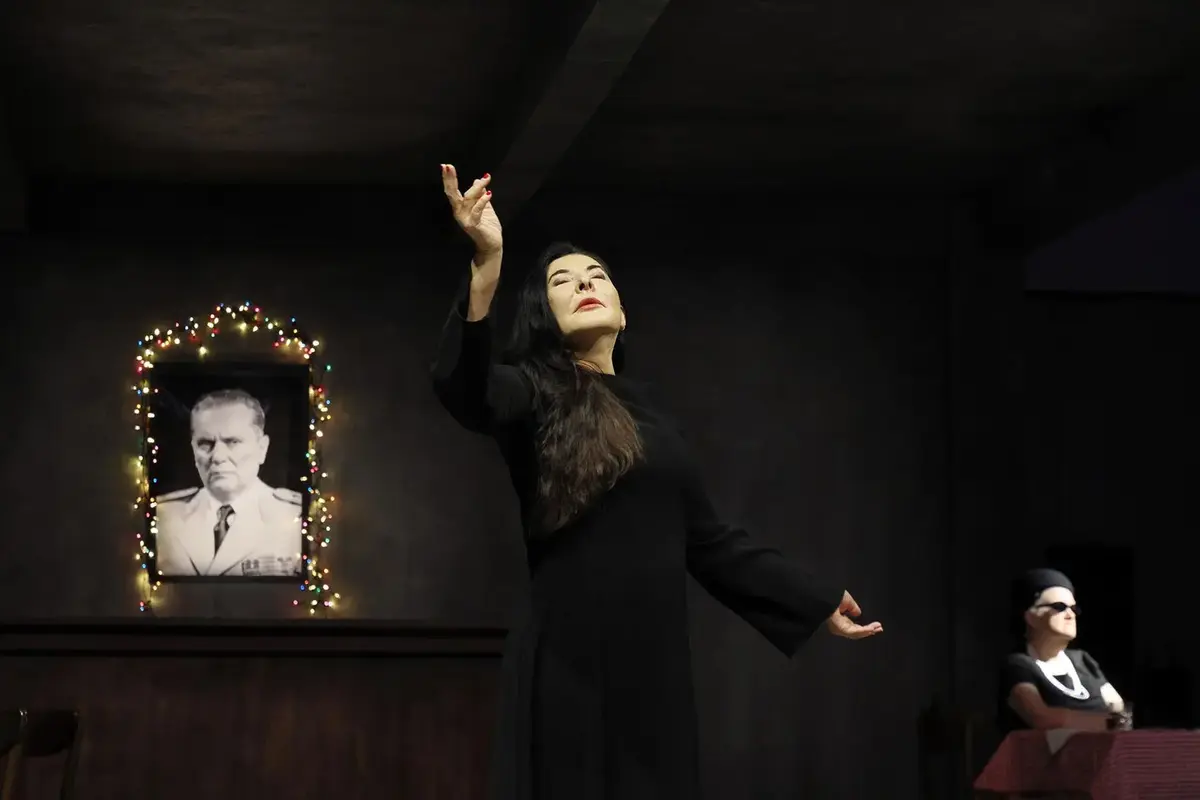
If anyone followed me for a week to see how much I work, they would end up in sanatorium.
Marina Abramović, Balkan Erotic Epic (2025) | Photograped by Marco Anelli
______________________________
Abramović continues to work with the same relentless energy, saying "If anyone followed me for one week to see how much I work they would end up in a sanatorium." Most recently, she was awarded the 2025 Premium Imperiale, often described as the "Nobel Prize for the Arts", recognizing her enduring impact on contemporary art. Blenard Azizaj is also developing new work of his own. Most recently debuting "Mbi Fjale" - a performance bridging fragments of Albanian folk tradition, its rhythms, movements, costumes and instruments, with contemporary dance and electronic music. Balkan Erotic Epic is set to revisit the stage in Gran Teatre del Lice Barcelona in January 2026. As they both note, the collaboration that began with one piece is only at its beginning, evolving, and setting the stage for what comes next.