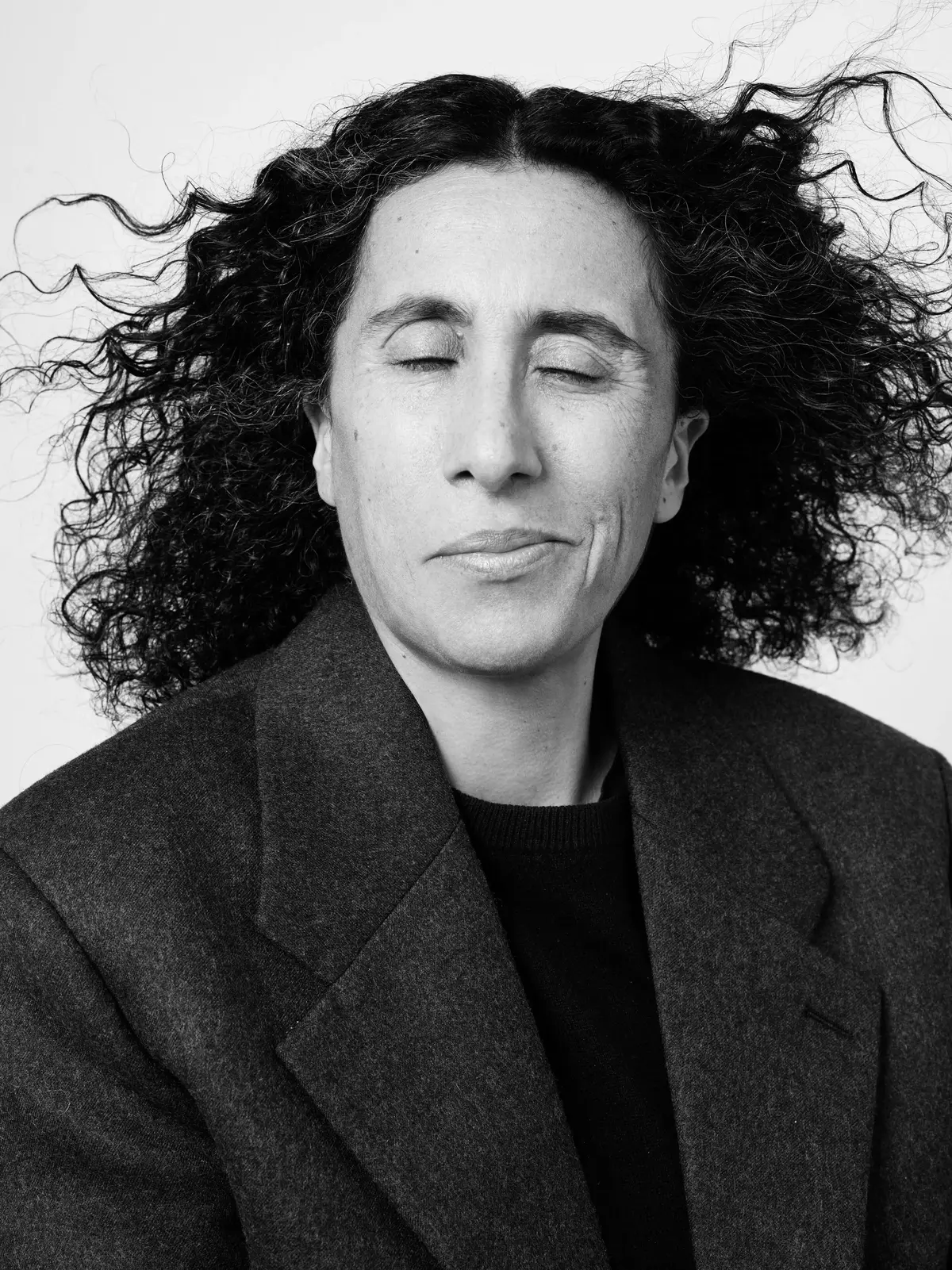
Few figures have shaped the future of fashion quite like Sara Sozzani Maino. As Creative Director of Fondazione Sozzani and founder of Vogue Talents, she has championed new generations of designers, advocated for sustainability, and mentored young talent around the world. Now, as President of the International Fashion Festival in Porto Montenegro, Sara brings her vision and values to the Adriatic, setting new standards for the industry’s future.
Guided early on by her legendary aunt, Franca Sozzani—iconic editor-in-chief of Vogue Italia—Sara began her journey at Condé Nast, immersed in one of fashion’s most creative environments. From the start, she felt a responsibility to give back and open doors for others, helping to shape a more inclusive and forward-thinking industry.
For this exclusive interview, Creative Director and Editor-in-Chief of The Collection FAB, Zina Pusep, sat down with Sara Sozzani Maino to discuss creativity, mentorship, the evolving fashion system, and the true meaning of legacy.
_____________________________________
Zina: I wanted to start our conversation by talking about your engagement in finding talent. Listening to your story, I could relate - in some ways, you were saying “I tried this, I tried that, I was looking for my path.” So, since you’ve discovered so many talents and have such long experience in that, what is a sign for you that someone really has it?
Sara: Before answering your question, I need to go one step back. I’m from a fashion family, and when I started, it was really fashion that picked me, not the other way around. I started working with my mom and maybe working with my parents wasn’t the best timing. My aunt Franca Sozzani saw I was struggling, so she said, “Come to Condé Nast and see what happens.” I always felt privileged. I realized I was working at one of the best magazines, but only years later, I didn’t know anything about fashion. Back then it wasn’t as fast-paced as it is now, so I had time to discover what I really wanted to do. I started at 19, and by 24 or 25, I realized the new generation wasn’t coming up, whether from Italy or elsewhere. Someone had opened the door for me, so I felt I had to open doors for others. That’s how my passion for supporting the next generation started. I believe the new generation is our future - whether you have children or not, we all have a responsibility for the future.
That’s how it all started. Back to your question about how I spot talent… Honestly, it’s always hard to answer. Maybe I have a talent for recognizing talent. But I’ve also learned not to choose by personal taste. If I did, I might not pick anyone! It’s not about personal taste - it’s about the story, what’s behind it. I never followed fashion as a fan; I’m not a fashion addict. That balance saved me from being swept up by the trends. I try to see creative people as they are and what they want to translate. It’s not about how I see talent, but about an intensive way of seeing, and really listening. It’s never just about clothes, but about what’s behind them, the story and everything else. I don’t think as a journalist, a buyer, or a stylist - I think about what the creative person wants to transmit. There’s no simple answer; it’s a feeling. When I see designers or students, I never tell anyone they’re not capable. Who am I to say that? It’s easy to say “yes, I like it” or “no, I don’t.” For me, it’s about giving constructive feedback, whether it’s positive or not. I’ll ask, “Are you sure you want to do this?”
Zina: It was very interesting to listen to your stories and how you started. I laughed so much when you talked about your experience at Lake Como with Helmut Newton and the fake money. That was iconic, and you were so young! Could you share another memory from your early career that truly shaped you or left a lasting impression?
Sara: There are so many memories and each experience was unique, but I’ll never forget my first shoot with Bruce Weber. It was an incredible adventure: there were about fifty people on set, and another stylist and I spent hours dressing everyone, from nine in the morning until two in the afternoon. We were so focused on our work that we didn’t even notice what was happening on set until we finally stepped out and everyone was just having fun, dancing, enjoying themselves. It was kind of incredible. Those moments really stayed with me.
Zina: Your aunt, Franca Sozzani, was a legendary force in fashion. What was it like working alongside her? Is there a particular piece of wisdom or approach that has stayed with you? What was her "signature" approach?
Sara: Working with Franca was truly a privilege. She has always been, and still is, my mentor. I learned everything from her during the 22 years we spent side by side. The most important wisdom she passed on to me is to never think something is impossible and to always be bold. If you want to make a mark, you need to take risks, and that boldness was always evident in her work. That was her signature: Belief that nothing is impossible
Zina: In that perspective, do you think mentorship is important for young creatives? Is it essential for success, or just a lucky addition for those who find them?
Sara: Mentorship is fundamental.
Contests and competitions are important, but without mentorship and follow-up, it’s like someone who wins the lottery but never had money before - they don’t know what to do with it. Mentorship is one of my pillars, along with education. Education doesn’t happen just in school; many people can’t afford it, so education must happen every day - through projects, through ideas, through your position, and by creating opportunities.
Mentorship is essential for everyone - even for those who win contests, because managing money and making decisions isn’t easy. Mentors help give you direction, not by telling you what to do, but by laying out priorities and options and making you think for yourself. I always tell designers and students to listen to others, but not too much. Most people give opinions based on their own taste or experience, and that’s not always helpful. You have to put yourself in the soul of the designer and try to understand what they want. Give them options, not to make it easier, but to help them make thoughtful choices.
Zina: You’ve supported so many young talents. Has anyone changed the way you see the future of fashion?
Sara: What I always tell designers and students is that I learn so much from them- they have so many stories and visions. I do this work because working with designers and students keeps me young - I’m like a vampire, feeding off their energy to stay young! Jokes aside, I really do learn from their stories, backgrounds, and their transparent, emotional ways of expressing themselves. For example, about 10 years ago, I went to Ghana and saw Kantamanto Market - huge piles of used clothes. That moment made me realize something was wrong. In 2015, I watched the documentary “The True Cost.” If you haven’t seen it, I recommend it. Sadly, not much has changed in the past decade. I’m not against the fashion system - it’s given me many opportunities - but I don’t think it works anymore. The industry is in crisis. It’s not sustainable, productive, or economically sound, and it doesn’t want young designers. Consumers have changed the way they buy, but big brands don’t seem to understand. No one acknowledges that paying €7,000 for a coat isn’t sustainable, even if there is demand.
Zina: I’m interested in your work around sustainability. For instance, many young designers are now very aware of the importance of sustainability and conscious brands. But what happens when you need to scale up? How can a young designer grow their business and stay true to their values?
Sara: It can sound naïve, but the truth is: you have to set your own rhythm. You don’t have to fit into “the system.” If you decide to make, for example, only handmade coats, and you manage to do only 50 pieces a season, then that’s your pace. The only brand really working this way is Hermès. Why? Because it’s artisanal. You go to their shop, and maybe the lowest price is €200, but it’s never been about the system. People think Hermès is exclusive not because of the price, but because not everyone can have it - it’s handmade, it’s limited, there’s a real cost inside.
Sara: Change is happening, even if it’s slow. I was just in Madrid visiting a sustainable brand that’s been working this way for 20 years - there’s still debate about whether it will “work,” but the important thing is the attempt. I’m optimistic. I don’t know what will happen in 100 years, but I know the change is underway. What frustrates me is that big brands and CEOs - some making €10–20 million a year, aren’t adapting. They’re stuck in a system they created, like hamsters in a wheel, and they can’t get out because of fear. I worry that if things shift even a little, many jobs will be lost - not because of the change, but because everything has been overloaded. Someone just told me last week there was a brand with 250 people in their styling team! That’s insane. The whole system is bloated.
New generations shouldn’t even try to fit into the old system - they should build something new. Projects will become more important than brands, and while not every project will survive, the ecosystem will be richer for it. I’m optimistic that it will work.
Zina: What about technology? This year at IFF, we’re seeing a lot of innovation, which is great for our region. What digital tools do you think are going to change the industry? Are there any you think we should be wary or critical of?
Sara: Technology is fantastic, but it’s like a drug—you have to be careful not to overdo it. For example, before COVID, hardly anyone used Zoom. Now it’s ubiquitous. I have mixed feelings about AI. I worry for the younger generation - the kids of my friends, or even younger - because while AI can be useful if you know what information you’re inputting, there’s a risk people will use it just to do things faster, without caring about what they’re learning or creating.
There need to be barriers and rules. Our generation is “safe” because we saw things as they were before, but what about someone born today? In six years, when they start primary school, what will their world look like?
I use ChatGPT consciously, for example, to help write 20 emails in five minutes, but I know what I’m doing. Kids using AI for research - say, on World War II - might just copy and paste without understanding anything. That’s my worry. Education has to go beyond school, because technology has the potential to degrade our skills if we use it lazily. Younger kids today often don’t even know how to handwrite. I’m 22 years older than you, but even I notice my handwriting is getting worse, since I mostly type or use sticky notes to remember things. What about five-year-olds who will never learn to write by hand? If they have smart parents, maybe they’ll learn, but otherwise… it’s concerning.
Zina: Since we’re talking about younger generations and the future, let me ask a more concrete question about the industry. Recently, many big fashion houses have been appointing celebrities as creative directors, while true designers - people who devoted their lives to fashion - are sidelined. Meanwhile, a singer or influencer suddenly becomes a creative director. Do you think this is just marketing? What message does it send to younger designers?
Sara: To me, it’s just a commercial move. The job of creative director has been reduced to a dreamless, follower-driven position. I know a designer who was trying to get a consultancy role, and he found out that brands were choosing candidates based on how many followers they had!
You can’t judge someone’s talent based on their likes or follower count. What about someone who decides not to have Instagram but is a genius? Would they be ignored just because they’re not online? I’d love to hear your perspective as someone 20 years younger than me - why do you think social media has this power? When did it become so central, and what are you actually drawn to on Instagram?
Zina: I think for my generation, Instagram is about lifestyle. It’s all about feeling and aesthetics. Recently there’s been a trend for nostalgia—content that reminds us of childhood, before the internet was so present. My friends and I are turning 30 soon; we’re not kids anymore, but we’re not old either.
So nostalgia is huge. Fashion brands are using that too - it instantly triggers an emotional reaction. Personally, I get inspiration from the internet - Instagram, magazines like Dazed, Culted, Interview, and Highsnobiety. I’m not into monthly magazines that chase trends; I prefer collectibles with substance, things you’ll want to keep.
Zina: Fondazione Sozzani has become a reference point for creativity and new talent. How did it all begin, what is the mission and vision that guide its work today?
Sara: I’m happy that Fondazione Sozzani has become a reference point for creativity and for the new generation - this has always been at the core of what I do. It takes passion, vision, and maybe a bit of craziness, but we’re proud of what we’re building. Our mission is to keep pushing creativity forward, especially in the fields of culture and education, and to make sure we continue to serve as a reference for new talent.
Zina: Finally, looking ahead, what’s next for you, and what does legacy mean in your world?
Sara: Now I’m working mostly on my family’s foundation – Fondazione Sozzani, created by my mother. The fundamental pillars are still the same - regeneration, education, responsibility. I still work a lot with schools and on advisory boards, but for me, it’s all about the next generation. We’re just passing through this world - eventually, we all leave. I don’t have children, but I always say I have “a thousand kids.” That’s my legacy. Heritage is important, whether through family or your work. My cousin made a documentary about Franca (“Chaos and Creation”); when it was finished and presented at Venice, Franca passed away four months later. She said the most beautiful legacy in the world is a child - which I agree with - but you can also leave a legacy through your work and values.